
Anyone who has survived a decade in retail procurement knows the checkout counter is absolute prime real estate. Finding a reliable countertop display stand supplier will make or break your impulse buy metrics—no exaggeration. Over the last 15 years, I’ve flown to Guangdong and Fujian more times than I can count, choked down terrible factory tea, and argued over millimeter tolerances on these exact fixtures. Let's skip the supplier fluff and get straight to what actually matters when you're buying these units in bulk.
What is the realistic price range and MOQ for a custom Countertop Display Stand?
Pricing is a total mess because buyers are constantly comparing apples to oranges. Need a basic clear acrylic setup for makeup or contact lenses? You're looking at 73 to 100 CNY per unit, which is roughly $10 to $14 USD. Want a premium metal and wood laminate unit for tile samples or high-end cosmetics, though? Expect to pay closer to $150 to $180 per set.
That’s when they get you on the Minimum Order Quantity. A direct factory in Xiamen might demand 200 sets for a $165 stainless steel umbrella flooring stand. Smaller acrylic units, though? Factories in Zhongshan will often drop the MOQ to 100 pieces if you're willing to pay a slight premium. You know how this goes. You ask for 50 units just to test the market, and they quote you 500. Push back. Offer to eat a 15% setup fee to lower the MOQ on that first run.
How do I choose the right material without getting scammed on a Countertop Display Stand?
Suppliers love upselling you on materials you simply don't need. Selling cheap gum and lip balm? A 3mm thick acrylic Countertop Display Stand is perfect. It’s cheap, it’s clear, and it barely takes up any visual space.
Displaying heavy tech accessories or premium skincare, on the other hand? Acrylic will warp and look like garbage after six months. You need an MDF base with a metal frame. I always tell my clients to demand the exact material grade. Don't just accept "metal" on the spec sheet. Ask if it's 304 stainless steel or just cheap 201 carbon steel that will rust the second a store clerk wipes it down with bleach.
- Acrylic: Best for lightweight cosmetics, jewelry, and low-budget rollouts.
- MDF with laminate: Ideal for heavy items, tiles, or whenever you need custom brand colors.
- Metal: Necessary for high-traffic, high-weight loads like hardware or premium spirits.
What are the common mistakes buyers make when customizing a Countertop Display Stand?
Want to know the biggest mistake? Making the display way too tall. I once watched a boutique owner in Texas drop $12,000 on custom wooden countertop displays that completely blocked the cashier's line of sight to the front door. Security hated it. Cashiers hated it. They ended up literally chopping the tops off with a circular saw.
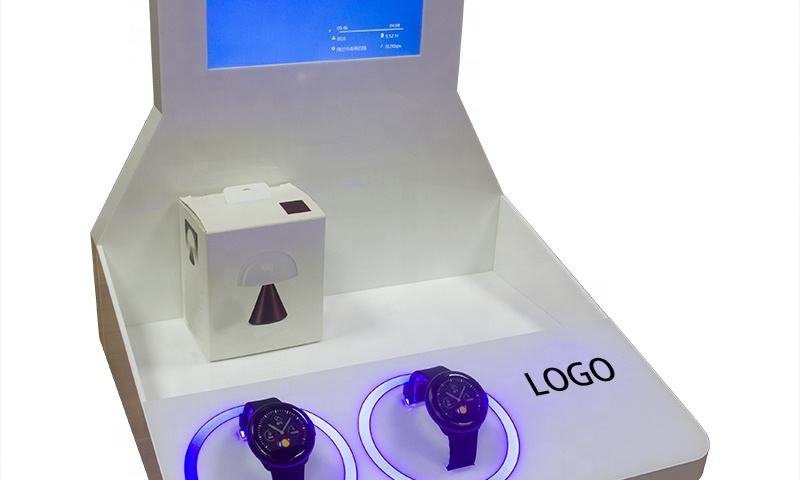
Keep your countertop display stand under 18 inches in height. The whole point is impulse purchasing, not building a physical barrier. Forgetting the graphics budget is another massive rookie error. A supplier in Fujian might build you a gorgeous physical stand, but if you don't provide print-ready vector files for the header cards, they’ll just slap a low-res, pixelated sticker on the top. Demand a pre-production sample with the actual graphics applied before you authorize the full production run.
How long does production actually take, and what certifications should I demand?
Suppliers will tell you 15 days. They're lying. A realistic lead time for a customized Countertop Display Stand involving metal welding, powder coating, and acrylic bonding is 25 to 35 days. If they promise you 10 days, they are either subcontracting to a buddy's garage or they completely skipped the curing time on the powder coat.
Don't let them blow smoke when it comes to certs, either. If the stand is going into a major big-box retailer, you need ISO 9001 for the factory, plus SGS or Intertek test reports for the materials. I had a client get hit with a massive chargeback once because the MDF used in their displays didn't meet CARB P2 formaldehyde emission standards. Always ask for the raw material certs upfront. If a supplier won't share their certification docs before you pay the deposit, just walk away.
Why do so many buyers get burned by trading companies for their Countertop Display Stand orders?
Trading companies are great at English and WeChat, but absolutely terrible at problem-solving. You think you're negotiating with a factory manager in Guangdong, but you're actually talking to a 22-year-old sales rep in a Shenzhen office building who subcontracts your order to three different workshops.
When a defect happens—and it will—the trading company blames the factory, the factory blames the trading company's specs, and you're stuck holding the bag. How do you spot them? Look at their business license. If their scope says Trading Company or if their registered capital is tiny, they aren't making anything. I prefer dealing with actual manufacturers, even if their communication is a bit rougher around the edges. You can always hire a local sourcing agent to bridge the language gap.
What specific design tweaks maximize impulse buys on a Countertop Display Stand?
The physical stand is just a vehicle. The design needs to force interaction. The best Countertop Display Stand designs I've seen use a cascading tier system. It naturally draws the eye downward and practically forces the customer to reach for the product.
Integrate a clear acrylic dump bin at the bottom tier, too. Cashiers can easily restock it from the back without taking the whole unit apart. And please, include a secure locking mechanism for the header graphic. Nothing ruins a premium brand image faster than a curled, peeling cardboard header held together by scotch tape. Build a slide-in channel for the graphics so your store managers can swap out promotions in ten seconds flat.