
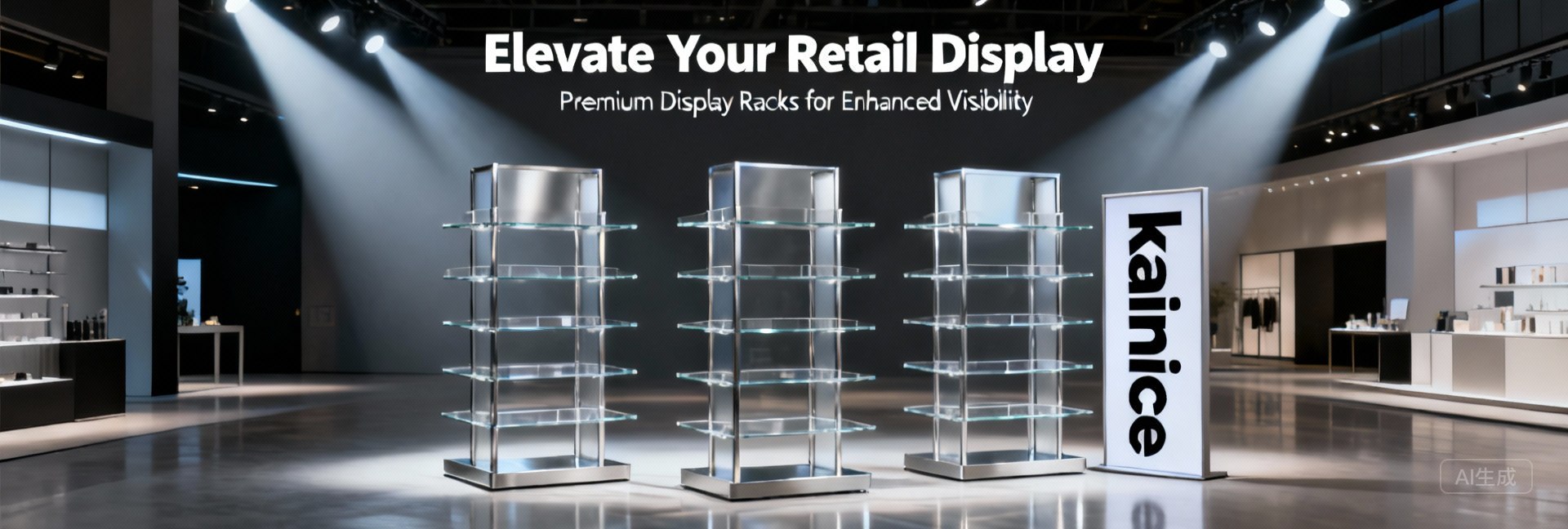
Listen, if you've spent any real time on the retail floor, you already know a flimsy Wall-mounted Display Shelf will tank your store's aesthetic before the grand opening even finishes. I've watched boutique owners drop serious cash on premium inventory, just to slap it on sagging acrylic display stands and bent aluminum racks that scream "backyard DIY." Your fixtures? They're the silent salespeople doing the heavy lifting. Grab a coffee, and let's hash out what actually matters when you're buying these things overseas.
What is the realistic price range and MOQ for a custom Wall-mounted Display Shelf?
Pricing is all over the map, honestly. It depends on the material, the finish, and exactly where the factory sits in China. Sourcing clear acrylic shelves out of Dongguan? Expect to pay somewhere between ¥47.78 and ¥51.76 (about $6.50 to $7.20 USD). That gets you a standard MOQ of 100 pieces. You're mostly looking at basic, straight-cut designs here—perfect for standard retail books or cosmetics, nothing fancy.
Switch over to kids' or floating acrylic shelves from Henan suppliers, and the price jumps to ¥69.68 to ¥78.97 ($9.50 to $11.00) for a 10-set minimum order quantity. You're paying extra for those curved edges and the specialized invisible mounting hardware. If you want metal instead, aluminum profile frames out of Hunan run $5.00 to $5.32 per kg, and they'll let you slide by with a 1kg MOQ.
Want finished wall-mounted aluminum book shelves from Chengdu, though? You're looking at $9.70 to $12.20 per piece. That covers the extrusion, cutting, and basic assembly. Just do yourself a favor and demand a detailed quotation sheet. Make sure it breaks down the tooling costs versus the per-unit price before you wire them a dime.
How do I choose between acrylic and aluminum for my Wall-mounted Display Shelf without getting ripped off?
My rule is pretty simple: stop picking materials just because they look pretty in a supplier's catalog. Last year, I had a client try to hang heavy vinyl records on 3mm clear acrylic. It snapped clean in half under the weight of the very first batch. Don't be that person.
Acrylic (PMMA) delivers that invisible, premium vibe. It's perfect for high-end cosmetics, jewelry, or boutique books, reflecting light beautifully and making small items look wildly expensive. Aluminum, on the other hand, gives you the raw structural integrity you need for heavy retail apparel, hardware, or supermarket goods. It takes impacts and heavy loads without so much as bending.
Need serious load-bearing capacity for a grocery or hardware store? Go aluminum. Want visual lightness to sell a high-margin beauty brand? Stick to thick cast acrylic. Just don't try to save a buck by forcing the wrong material into the job.
What are the most common quality control mistakes when sourcing a Wall-mounted Display Shelf from China?
Let's talk about edge polishing on acrylic, mostly because this is exactly where factories try to cut corners. Skip the flame polishing, and those cut edges end up looking cloudy, white, and downright cheap. You'll end up with a product that screams "discount bin" instead of "premium boutique." Trust me, your customers will clock it instantly.
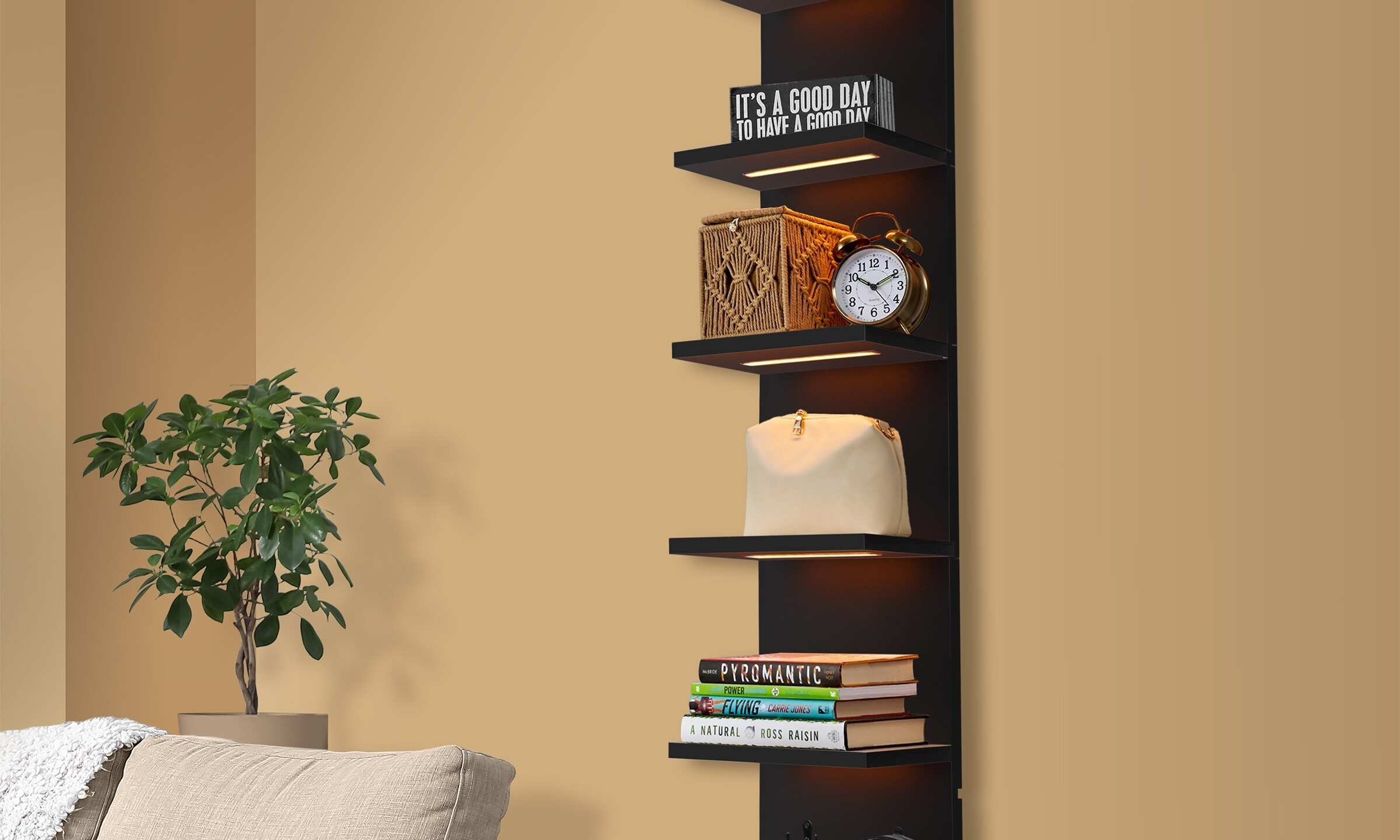
With aluminum, the headaches usually boil down to a few specific nightmares:
- Powder coating thickness dropping below 60 microns. Do that, and the finish chips the second a cardboard box slides against it.
- Sloppy welding seams on the aluminum profile joints, leaving behind sharp, dangerous burrs.
- Missing rubber padding on the back brackets. Guess what? That will gouge your newly painted store walls to shreds.
Always demand SGS inspection reports, along with actual photos of the coating thickness test, before those goods leave the factory floor. If they start making excuses? Hire a third-party inspector to go kick the tires on-site.
How long does production and shipping actually take for a bulk order of Wall-mounted Display Shelves?
A standard lead time runs 15 to 20 days for acrylic, maybe 20 to 25 days for aluminum fixtures. But hold on—that's just production time. Tack on another 30 to 40 days for sea freight to the US or Europe, plus a solid week just to clear customs.
If a supplier promises they can ship a custom 5,000-piece order in 10 days, they're flat-out lying. They're likely just shoving your order to the back of the queue to prioritize a bigger client who actually pays on time. Build a 15-day buffer into your supply chain timeline. Otherwise, you'll be staring at empty shelves on launch day.
What specific certifications should I demand from a Wall-mounted Display Shelf supplier?
You need ISO 9001 for the factory's management system. Plain and simple. It proves they have actual documented processes instead of just winging it on the production floor. For the materials themselves, though, ask for REACH or RoHS compliance. This is non-negotiable if you're selling in Europe or strict US states like California.
These certs ensure the plastics, glues, and paints won't off-gas toxic chemicals inside your enclosed store environment. Nobody wants their customers breathing in volatile organic compounds while browsing the shelves. Honestly? If a supplier refuses to share their certification docs upfront, just walk away. Period.
Can I get low MOQs for a Wall-mounted Display Shelf if I'm just testing a new store layout?
Sure, some Chengdu aluminum suppliers will offer 1-piece MOQs, but the unit price jumps straight to the maximum $12.20. Here's the reality: it's rarely worth the customs headache, the freight forwarding fees, and the port charges for a tiny test batch. The logistics alone will eat your profit margin alive.
If you only need 20 pieces to test a new layout, just pay the premium or buy from a local domestic wholesaler. Save your overseas sourcing energy for the full rollout. Wait until you know the design actually works and you can commit to a 500-piece run. That's the only way to snag the real wholesale pricing that makes importing worth the hassle.