

Spent more than five minutes in retail procurement? Then you already know a properly engineered corrugated display rack practically sells itself through impulse buys. Sourcing them, though? That is where most buyers get taken for a ride by factories skimping on paper weight and structural integrity.
What is the real cost difference between a cheap and a premium corrugated display rack?
The price gap in this category is brutal, and it constantly catches new buyers off guard. I recently pulled quotes for a standard floor unit just to see where the market sits. A basic counter display out of Qingdao was hovering around $0.25 per set on a 500-piece MOQ. Compare that to a heavy-duty reinforced PDQ display from a Shanghai factory, and the price jumped to $12.88 per piece.
Why the massive jump? It all comes down to the flute profile and linerboard GSM. Cheap racks rely on single-face E-flute with a 120gsm test liner. They practically crush if you look at them wrong. Premium units, on the other hand, use B-flute or even double-wall BE-flute paired with a 170gsm to 200gsm Kraft liner. That is what you need to hold heavy liquids.
Listen, if a supplier quotes you $3 for a floor stand meant to hold 40 pounds of liquid shampoo, walk away immediately. They are planning to use substandard recycled board that will warp the second it hits a humid aisle. In the corrugated world, you always get exactly what you pay for.
How do I avoid the flimsy cardboard trap when ordering a custom corrugated display rack?
Nothing makes me madder than seeing a gorgeous print job on a display that collapses under its own weight. You have to demand a structural design review before they even think about touching the printing plates. I always ask for the bursting strength and edge crush test values right out of the gate.
For a standard retail environment, I want a minimum edge crush test value of 32. If the factory rep stares at you blankly when you ask for that, they are just a trading company guessing their way through your order. Make sure the design includes hidden internal partitions or interlocking tabs to keep things rigid.
Standard glue will fail the moment the humidity in a grocery store hits 60 percent. I strictly prefer hot melt glue for structural seams. It sets instantly and holds up way better in varying climates than cheap cold glue. Never let them substitute materials without your written approval.
What should I expect for MOQ and lead times when sourcing a corrugated display rack from China?
This is where you need to manage your own expectations before dialing a single factory. Running a massive big-box retail chain? Your MOQs will naturally sit in the thousands. But for boutique chains or regional rollouts, you can definitely find factories willing to do a 100-piece MOQ.
I once worked with a supplier out of Shanghai who offered a 100-piece minimum for a flat-pack reinforced unit, turning it around in just 15 workdays. Do not expect that kind of speed if you want custom tooling for a weirdly shaped header card, though. Standard dies take 3 to 5 days just to cut.
Custom structural dies take 7 to 10 days, and printing plates add another 3 days on top of that. Always build a two-week buffer into your production schedule for the inevitable structural tweaks. Rushing the tooling phase is the absolute fastest way to end up with a display that does not fit together properly.
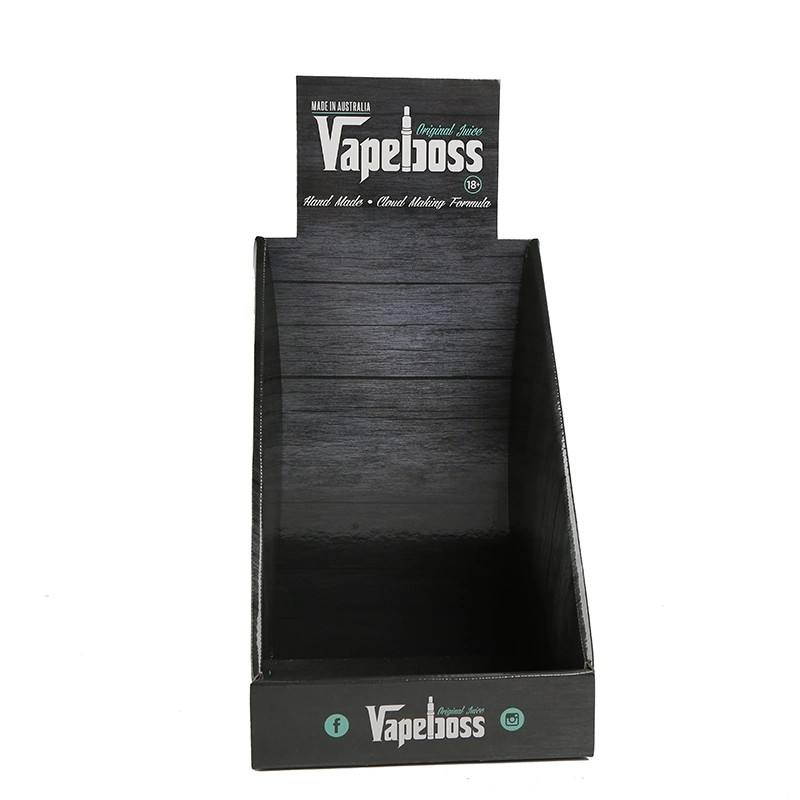
Can I really get full custom printing on a corrugated display rack without paying a fortune?
Here is something about printing on cardboard that most procurement managers completely ignore. Want photo-realistic, magazine-quality graphics? You need offset printing mounted to the corrugated board. That requires a minimum run of usually 500 to 1,000 pieces just to absorb the heavy setup costs and plate charges.
Only need 100 units? You are stuck with flexographic printing. Flexo is cheaper and faster, sure, but the color registration is never going to be perfect. I had a client once who demanded exact Pantone matching on a 200-piece flexo run. It looked incredibly muddy.
Know your printing method before approving the digital proofs, or you will end up rejecting the entire container. If your brand guidelines require crisp, high-definition imagery, you have to pay for the offset mount process. Trying to force flexo to do offset work is a guaranteed way to ruin your brand image.
What are the most common mistakes buyers make when approving a corrugated display rack prototype?
Sound familiar? You get a prototype in the mail, it looks great, you say yes, and then the mass production units turn into an absolute nightmare. The biggest mistake I see is approving a white sample without testing the actual assembly time on the retail floor.
A display might look brilliant on a CAD drawing. But if it takes a store clerk twelve minutes to fold and lock the tabs, corporate will ban it. I always demand a pre-production sample printed on the actual material. I physically time my warehouse guys assembling it just to see where they struggle.
When checking the prototype, I look for three specific things:
- Tab friction: Are the locking tabs too tight and tearing the paper, or too loose and falling apart?
- Weight distribution: Does the unit lean forward when fully loaded with product?
- Flat-pack efficiency: Does it fold completely flat to minimize shipping air?
If it takes more than 3 minutes to set up without tape or glue, I send it right back to the drawing board. Retail labor is expensive. Your display needs to respect the store clerk's time.
How do I verify if a corrugated display rack supplier actually knows retail compliance?
Retail compliance can literally halt your shipment at the distribution center, costing you thousands in chargebacks. You need to verify their FSC certification if your brand requires sustainable sourcing for paper products. More importantly, ask them exactly how they plan to pack the units for ocean freight.
A good factory will design the corrugated display rack to flat-pack efficiently. We are talking about fitting exactly 40 or 50 units on a standard 40x48 inch GMA pallet without overhang. If they just throw them in a master carton and hope for the best, your freight costs will eat your entire margin. Optimize the pallet yield from day one.
Always ask for their ISTA 3A transit test report to prove the packaging actually survives the supply chain. If they flinch or claim they do not do drop tests, they do not ship to major retailers. Getting this wrong means your displays arrive at the store looking like they were dragged behind a truck.