
Sourcing an MDF Display Shelf for a retail chain or boutique? You already know the market is drowning in cheap knockoffs that warp before the holiday rush even starts. I’ve spent fifteen years walking factory floors in Jiangsu, arguing with procurement managers over warped boards and peeling veneers. Let’s skip the glossy brochures and get straight to what actually matters on the ground.
What is the realistic factory price for a double-sided MDF display shelf in 2026?
If a supplier quotes you thirty bucks for a heavy-duty double-sided unit, run. They’re cutting corners on board density or slapping together toxic glue that will off-gas right in your aisles. From my recent sourcing runs, a solid commercial-grade gondola shelf out of a reputable hub like Changshu, Jiangsu, should land somewhere between US$60.00 and US$85.00 per unit.
That price point buys you 18mm high-density boards, reinforced steel back panels, and actual edge banding. I recently helped a mid-sized Texas grocery chain lock in a contract at $72 per unit for a 50-piece MOQ. They tried getting cute and renegotiating down to $50 with a different vendor. The result? Shelves literally sagging under the weight of canned tomatoes. Don't be penny-wise and pound-foolish.
How do I avoid the common MDF display shelf quality traps when sourcing from China?
Here’s the reality with MDF—it absolutely hates moisture. Stocking refrigerated items or operating in a humid climate means a raw board will swell up like a sponge. You have to demand an anti-rust corrosion protection frame, ideally paired with an electronic spray finish.
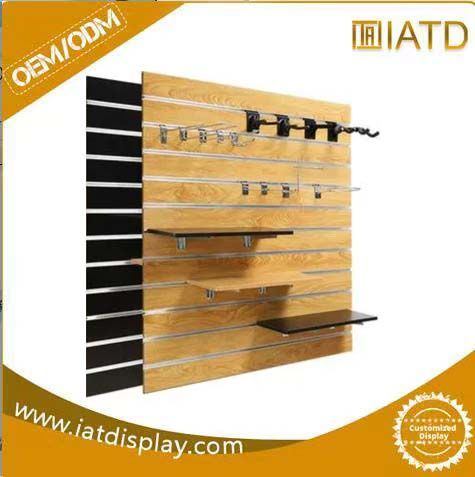
I always push my clients toward adjustable height MDF slatwall subrack frames. Retail layouts change constantly, and you need that flexibility. Last year, a client took delivery of a batch where the metal brackets were literally painted over active rust. We rejected the entire 40-foot container right at the port. Make sure those steel components go through proper electronic spray treatment before assembly. It bumps the unit cost by maybe $2, but it saves you thousands in replacement headaches.
What are the standard MOQ and lead times for custom MDF retail shelving?
Factories aren't going to halt their lines for five custom units. The sweet spot for a custom build is an MOQ of 50 Pieces. Drop below that, and you're eating a 30% premium for so-called customization. Hit 50 units, though, and you get the custom color matching and logo printing without getting fleeced.
Lead times? Expect 25 to 35 days for production once the deposit actually clears their bank. If a supplier promises a 10-day turnaround for a custom order, they’re either subcontracting to a buddy's garage or lying straight to your face. I always build a two-week buffer into my project timelines just for unexpected port delays.
Should I choose an MDF display shelf with an electronic spray finish or raw melamine?
This is the debate I get into over coffee with almost every buyer I meet. Raw melamine is cheap and scratch-resistant, sure. But it also looks cheap. If you want the fixture to mimic the high-end aesthetic of painted wood or matte metal, you need the electronic spray finish.
That spray process lays down a flawless, uniform coat. It actually resists chipping when shoppers drag heavy items across the edges. Honestly, if you're outfitting a premium boutique or a high-traffic supermarket aisle, just skip the melamine. The spray finish elevates the perceived value of your merchandise, which is what drives sales in the first place.
How do I verify if an MDF display shelf supplier actually holds valid ISO and SGS certifications?
Every factory in Guangdong will slap an ISO 9001 certificate on their Alibaba profile. But is it expired? Does it belong to the actual manufacturing entity, or just a trading company? When sourcing, I demand the original SGS test reports for formaldehyde emissions. MDF is glued together. If they cut corners with urea-formaldehyde resin, your store will smell like a high school chemistry lab.
Don't just accept a PDF. Ask for the certificate number and verify it directly on the SGS or TÜV database. If the supplier gets defensive or claims the boss is in a meeting, walk away. A legit factory—especially one producing commercial supermarket shelving—will have their CE and ISO docs ready to email in five minutes.
What are the biggest mistakes buyers make when ordering freestanding MDF display shelves?
The absolute biggest blunder? Ignoring weight load capacity. Buyers see a nice freestanding unit and assume it can hold 200 lbs per tier. Standard 18mm boards max out at around 80 to 100 lbs unless you have hidden steel reinforcement.
Here are the most common traps I see procurement managers fall into when reviewing initial quotes:
- Ignoring packaging dimensions: These units are bulky. I once watched a buyer order 500 units without checking the CBM. Shipping costs doubled because they suddenly needed an extra container.
- Forgetting the PI details: Always confirm the Incoterms and payment terms before you sign the Proforma Invoice.
- Skipping the pre-shipment inspection: Never pay that final 70% balance before hiring a third-party inspector to check the assembly.
Always ask for the packing list and calculate your container loading capacity before you commit. Sounds like a rookie mistake, but you'd be surprised how often it happens.