
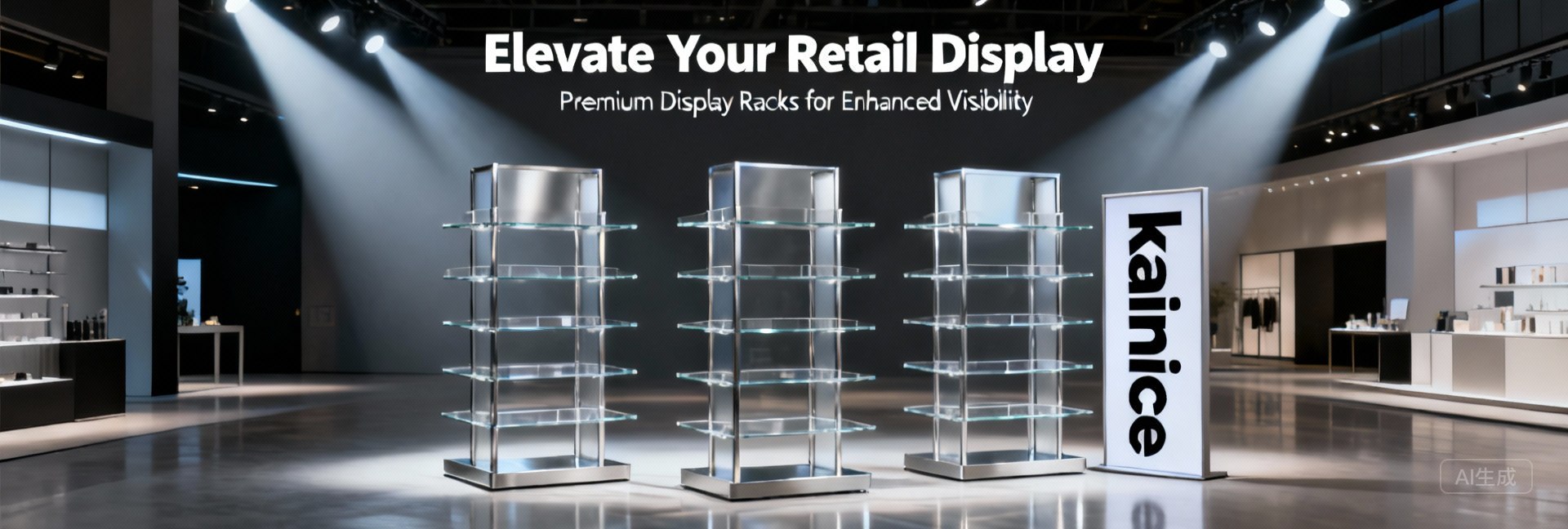
In high-traffic retail environments and modern commercial stores, selecting a heavy-duty, precision-crafted Shop Fitting Fixtures directly impacts merchandise visibility and brand authority.
The Reality of Retail Fixture Engineering
I have spent fifteen years on the factory floor, and if there is one thing I have learned, it is that a beautiful display is worthless if it hits the floor under the weight of a few sweaters. Many retailers come to me with a sketch on a napkin, but they have no idea what happens when that metal hits the powder-coat line or when the acrylic is subjected to a busy Saturday afternoon in a high-traffic mall. At kndisplay, we don't just build furniture; we engineer structural systems that have to survive human clumsiness, cleaning crews, and the occasional over-zealous stock clerk.Engineering tolerances in custom Shop Fitting Fixtures to prevent assembly failure
Ever wonder why discount display racks start wobbling after two weeks? It usually comes down to sloppy tolerances. When we talk about CNC laser cutting, we aren't just talking about cutting shapes; we are talking about precision fitment. In my shop, we hold a tolerance of ±0.1mm. If your hole spacing for a modular snap-fit connection is off by even 0.5mm, the entire vertical upright will lean. I remember a project five years ago for a national apparel chain. They tried to save money by sourcing generic metal uprights from a low-bid factory overseas. The hole-spacing was inconsistent by nearly 2mm across a 2-meter span. By the time they reached the fifth shelf, the leveling was so skewed that the glass display cases wouldn't seat properly. They ended up having to drill out every single hole on-site with a hand-held drill. It was a disaster. If you aren't standardizing your CNC bending angles, your modular components will never be interchangeable. We use rigid jigs for every bend to ensure that a shelf manufactured in June fits perfectly into a frame manufactured in December. That is the kndisplay standard. If it doesn't snap together with a satisfying, tight click, it doesn't leave the loading dock. Is saving a few cents on laser time really worth the cost of having a store manager try to force a shelf into place with a rubber mallet?Material selection pitfalls for Shop Fitting Fixtures: Virgin steel vs recycled alloys
The market is flooded with "recycled" steel that is essentially scrap metal melted down with zero quality control. It’s brittle. I have seen 18-gauge cold-rolled steel that snaps like a dry twig under load because it was full of impurities. When we source steel for our fixtures, we demand high-tensile virgin cold-rolled steel. The same logic applies to acrylic. There is a world of difference between cell-cast acrylic and the cheap extruded regrind that turns yellow after six months under store halogen lights. Regrind plastic is full of internal stress points. It might look clear when it comes off the line, but give it a few months of cleaning with standard glass cleaner, and you will see micro-fractures forming around the screw holes. How do you check what you are buying? Get a digital micrometer. If a supplier promises 2.0mm thickness but you measure 1.85mm, send it back. That 0.15mm difference is the difference between a fixture that holds 50kg and one that fails at 35kg. At kndisplay, we verify every batch of incoming material against our internal lab-tested quality benchmarks. We don't guess; we measure. If your current manufacturer cannot provide a mill certificate for their steel or a data sheet for their acrylic, you are playing a dangerous game with your inventory.Load capacity testing and structural fatigue in Shop Fitting Fixtures
Static load is easy. Anyone can make a shelf hold a weight when it’s sitting still. But retail is dynamic. Customers lean on displays, kids climb on them, and stockers drop boxes of inventory onto shelves. This is where cantilevered arms fail. We perform a standard drop-test on every new cantilever design. We load a shelf to 110lbs (50kg) and then apply a sudden force to simulate a heavy box being dropped. If the metal deflects more than 3mm, we go back to the drawing board and add a gusset. Gusset reinforcement is the secret to longevity. A simple triangular brace at the connection point between the arm and the upright can increase load capacity by 40% without adding significant weight or cost. Is saving $3 on a gusset really worth a $10,000 product spill? I have seen high-end perfume bottles shattered because a display arm wasn't gusseted properly. The metal didn't break; it just fatigued and bent, causing the shelf to tilt just enough for everything to slide off. That’s a failure of engineering, not just a failure of materials.Cost breakdown and maintenance strategies for long-lasting Shop Fitting Fixtures
The biggest hidden cost in retail fixtures is freight damage. If you aren't using pearl foam or heavy-duty corner bracing, your fixtures will arrive at the store looking like they went through a war zone. I have seen too many companies spend thousands on beautiful powder coating, only to have it scratched to ribbons during shipping because they didn't wrap the uprights properly. Speaking of powder coating, don't settle for anything less than a 60-80μm thickness. If the coating is too thin, it will peel when a customer catches a ring or a hanger on the edge. If it’s too thick, it will crack at the joints. We use a 6-pass curing process to ensure the finish is bonded to the metal at a molecular level. For maintenance, here is my advice:- ✔Quarterly Bolt Checks: Vibration from store traffic loosens fasteners. Tighten every bolt every three months.
- ✔Cleaning Protocols: Never use ammonia-based cleaners on acrylic. It causes crazing. Use only mild soap and water.
- ✔Touch-up Kits: Always keep a small bottle of matching powder-coat touch-up paint. A single scratch can turn into a rust spot in a humid environment if left exposed.

[Figure] Shop Fitting Fixtures commercial showroom deployment & structural details (Fabrication: kndisplay)
Scene: Matte black powder-coated steel frames hold solid oak shelving. Premium skincare is organized by height with clinical precision. 3000K recessed spotlights illuminate the Shop Fitting Fixtures against a polished concrete floor, captured in crisp 8k detail.
💡 Factory Veteran Tip:
Every retail chain and storefront layout has distinct footprint constraints and load-bearing requirements. Before signing off on bulk Shop Fitting Fixtures manufacturing orders, always demand certified load analysis drawings and a physical sample evaluation. At kndisplay, our engineering team provides free prototype evaluations and B2B fixture consulting for brands worldwide.