
Walk into any apparel store that sells well, and you will notice one fixture doing quiet, constant work: the Clothing Rack. From boutique showrooms and chain retailers to pop-up shops and wholesale showrooms, clothing display racks carry the merchandise customers see, touch, and try on. For retail store owners, brand buyers, and wholesalers, choosing racks is not a minor furnishing decision. Rack quality shapes how garments hang, how a floor plan flows, and how merchandise is valued in the shopper's eyes. This guide breaks down the main rack types, compares common materials, and outlines what to check before placing a bulk order.
Why the Clothing Rack Is Core Retail Equipment
A rack does far more than hold hangers. Used well, it becomes an active merchandising tool:
- Higher browsing time: open rails let shoppers flip through garments quickly, which encourages touching—and touching drives purchase decisions.
- Smarter use of floor space: double-rail and wall-mounted systems roughly double hanging capacity in the same footprint, which matters wherever rent per square meter is high.
- Seasonal flexibility: freestanding units can be repositioned in minutes when a new collection arrives, without drilling or refitting the store.
- Brand perception: a wobbly frame or chipped finish reads as cheap, and that impression transfers to the clothes displayed on it.
Main Types of Clothing Racks for Retail Stores
Different retail formats call for different rack styles. The most common categories buyers encounter:
- Single-rail garment rack: the classic straight bar on two uprights. Economical and easy to stock, ideal for everyday basics and overflow storage.
- Double-rail rack: two parallel bars set at different heights—one for tops, one for pants or skirts—doubling capacity within the same footprint.
- 4-way and waterfall racks: arms extend outward in several directions so featured pieces can be shown face-out. A favorite for highlight items near the entrance.
- Rolling clothing rack: a wheeled unit, often built on a stable Z-base with locking casters, designed for floor-plan changes, restocking, and flexible merchandising.
- Wall-mounted systems: rails, face-out arms, and shelves fixed to walls or slatwall panels keep the floor open for other fixtures.
- Racks with bottom shelving: hanging rails combined with lower shelves let folded goods, shoes, or accessories sell from the same footprint as hanging stock.
- Heavy-duty garment rack: reinforced frames rated for denim, leather, and winter coats—the standard choice for stockrooms as well as workwear retail.
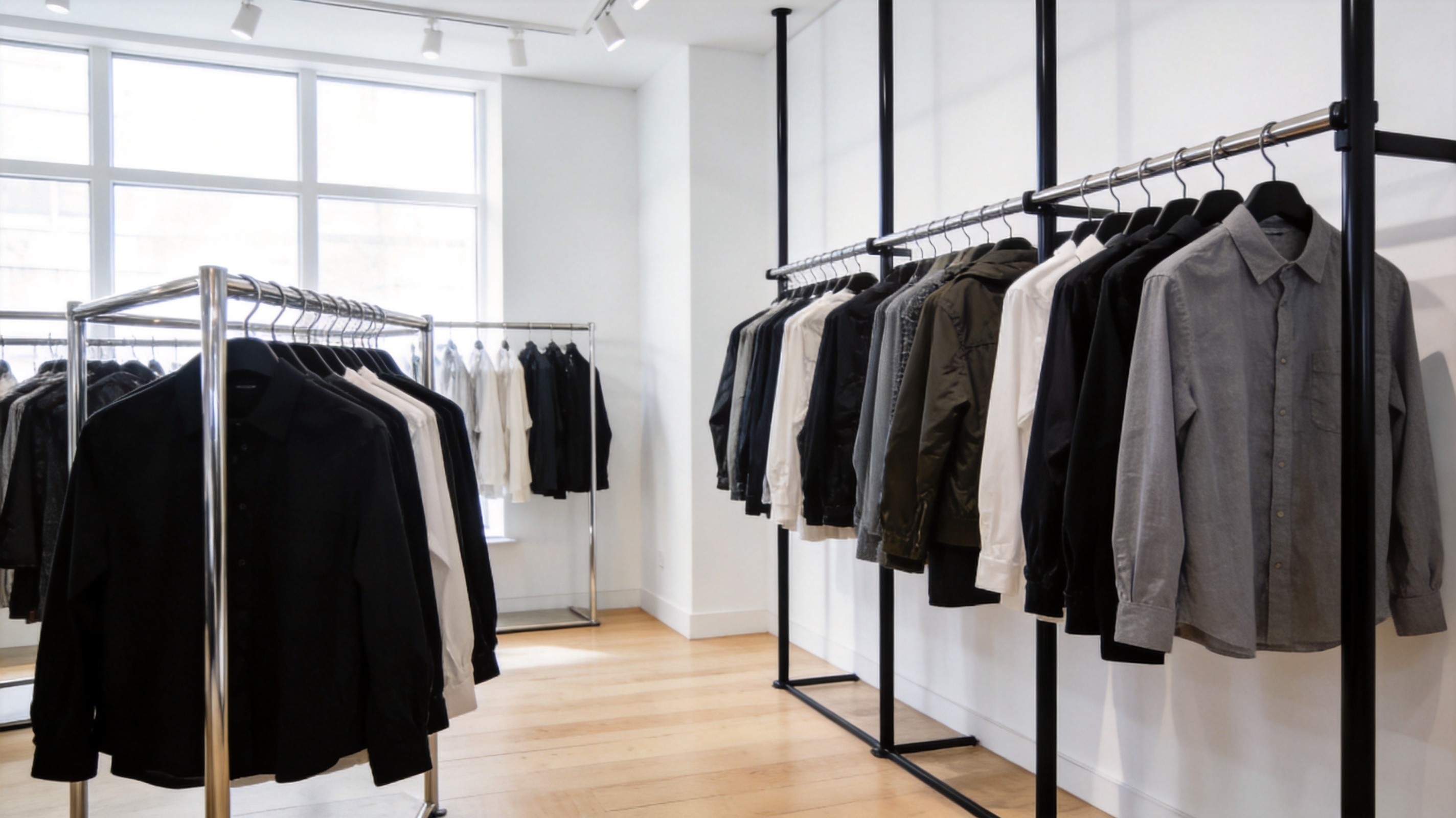
Material Comparison: Steel, Stainless Steel, Aluminum, and Wood
Material choice determines load capacity, lifespan, and the impression a fixture makes. The main options compare as follows:
- Powder-coated carbon steel is the default for commercial fixtures. It delivers high strength at reasonable cost, and the powder coat resists scratching and chipping far better than ordinary paint. Square or rectangular tubing also resists bending better than thin round tube.
- Stainless steel clothing rack options are the match for humid climates, coastal locations, and premium interiors. Scratches do not expose raw metal, so upkeep stays minimal—the trade-off is a higher price.
- Aluminum is lightweight and corrosion-resistant, which suits pop-up shops, trade-show booths, and displays that ship frequently. Absolute strength is lower than steel, so profiles need thicker sections for heavy loads.
- Wood and wood-metal hybrids bring warmth to boutique and showroom settings. Solid or engineered wood panels paired with a steel frame combine premium aesthetics with structural reliability, though wood surfaces need sealing against moisture.
One detail matters as much as the material name: the finish. Chrome plating gives the bright, classic retail look but can flake if the plating is thin. Powder coating produces a uniform, durable surface and holds color well, which is why most factory production relies on it. A useful shortcut when deciding: match the material to the heaviest garment you sell, not the lightest. Heavy denim and outerwear justify reinforced steel; lightweight knitwear gives you more freedom to prioritize appearance.
Key Buying Points Before You Order
Whether you are furnishing a single store or ordering wholesale clothing racks by the container, verify these specifications before committing:
- Load rating per rail, not just total: commercial-grade units should support 200 lbs (90 kg) or more per hanging rod, and racks should run at about 70–80% of the rated maximum to allow for uneven stocking.
- Joint quality: continuously welded load-bearing joints stay tight far longer than screwed or snap-together connections, which loosen under daily commercial use.
- Base stability: wide or cross-shaped bases prevent tipping when racks are loaded unevenly—a daily reality on a busy sales floor.
- Casters that actually lock: if mobility matters, confirm the wheels have foot brakes and mount on reinforced plates rather than thin sheet metal.
- Dimensions and clearance: measure ceiling height, aisle width, and doorway clearance, and leave side room so hangers slide smoothly.
- Finish versus environment: match the finish to your store's climate and cleaning routine; salt air and strong detergents both punish cheap plating.
- Export-ready packaging: for international orders, confirm whether units ship flat-packed or fully assembled, since packed volume drives freight cost as much as unit price does.
Why Source from a Clothing Rack Manufacturer Directly
Buying through resellers adds margin at every step. For overseas buyers especially, working directly with an OEM clothing rack manufacturer changes both the economics and the possibilities:
- Factory pricing: direct sourcing removes distributor markups, which compounds meaningfully across a full store fit-out or a container order.
- Full customization: an experienced factory can adjust tube gauges, dimensions, colors, and finishes to your brand standard, and add logo plates or custom hardware—turning racks into custom display fixtures rather than generic equipment.
- Consistent quality control: production with load testing, weld inspection, and salt-spray testing keeps every batch uniform, which matters when you replenish fixtures across multiple locations.
- Prototype support: a capable manufacturer will build a sample from your drawings or requirements before mass production, so the design is validated before capital is committed.
- Scalable replenishment: as the store network grows, the same factory can reproduce exact specifications for years, keeping the retail identity consistent everywhere.
When evaluating suppliers, ask for load-test reports and photos of the welding and finishing lines, and put tooling ownership in writing if you commission custom molds. These small checks protect both your design investment and the consistency of every future order.