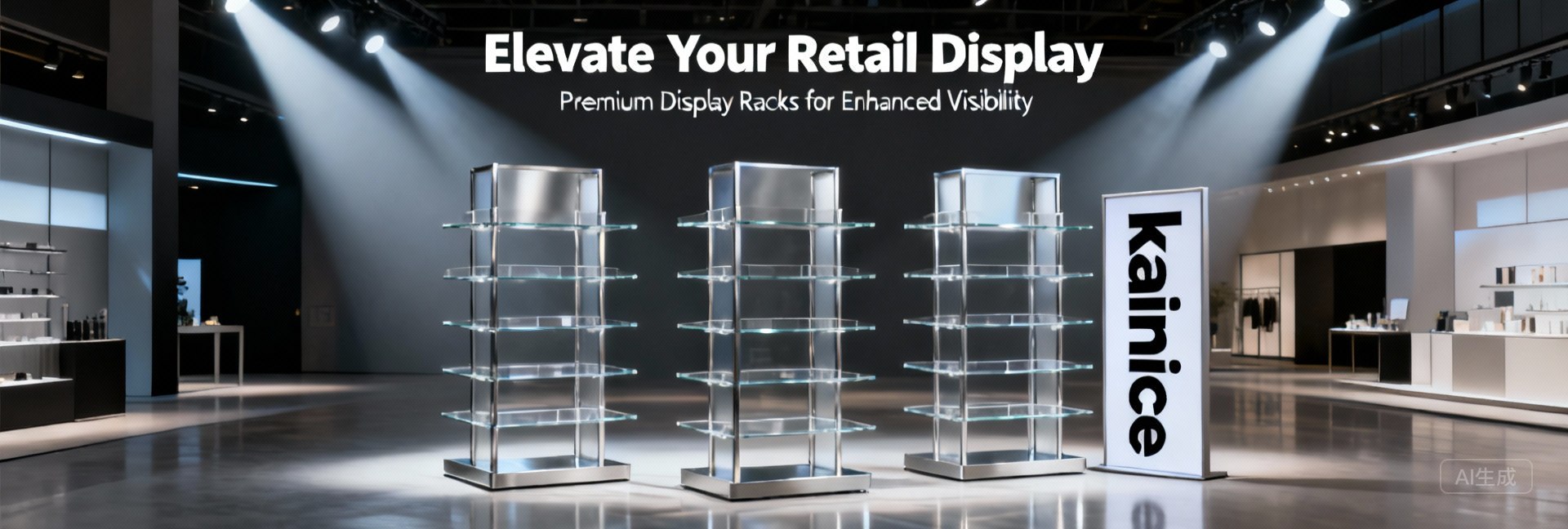
In high-traffic retail environments and modern commercial stores, selecting a heavy-duty, precision-crafted Metal Supermarket Shelf directly impacts merchandise visibility and brand authority.
The Engineering Reality of Retail Fixtures
I have spent fifteen years on the factory floor, and if there is one thing I have learned, it is that a metal supermarket shelf is not just a piece of bent steel. It is the silent backbone of your store’s revenue. If that shelf fails, your product hits the floor, your staff loses time, and your customer loses trust. At kndisplay, we don’t just manufacture; we obsess over the tolerances that keep a store running. You see a shelf; I see a stress-tested load-bearing system that must survive thousands of customer interactions.Preventing Metal Supermarket Shelf Sagging Through Precision Load Capacity Engineering
Ever wonder why discount display racks start wobbling after two weeks? It’s rarely the paint. It’s the gauge. I’ve seen retailers try to save a few pennies by opting for 22-gauge steel where the load demand clearly required an 18-gauge or 16-gauge cold-rolled steel (SPCC). When you place 50kg (110lbs) of canned goods on a shelf that was engineered for 20kg, you aren't just pushing the limits; you are inviting structural fatigue. At kndisplay, we calculate shelf deflection limits based on the specific yield strength of Q235 steel. If the steel is too thin, the center-point sags. Once that metal hits its plastic deformation limit, it will never return to its original shape. I remember a client who insisted on a thinner gauge for a heavy-duty grocery aisle project. They saved $2,000 on the initial order. Six months later, they spent $15,000 replacing damaged inventory and fixing shelves that had bowed so severely they were pulling the uprights out of alignment. The secret isn’t just thickness; it’s geometry. We use reinforcement ribs—stamped into the underside of the shelf—to increase the moment of inertia. A 0.8mm shelf with a properly engineered deep-draw rib will outperform a 1.2mm flat shelf every single time.Cold-Forming vs Hot-Bending: Choosing the Right Metal Supermarket Shelf Manufacturing Process
When you walk through a factory, look at the corners of the shelves. If you see signs of heat discoloration or brittle, uneven edges, that’s a red flag. Many low-end manufacturers use hot-bending because it’s easier on their cheap, blunt-force machinery. But heat-treating steel in an uncontrolled environment ruins the molecular grain structure. It creates stress risers that become the initiation point for cracks. We stick to cold-forming. Using CNC laser cutting with a tolerance of ±0.2mm followed by precise hydraulic press-braking ensures that the steel retains its structural integrity. When you bend cold steel, you are work-hardening the material, which actually increases its strength at the bend radius. Is saving $3 on a manufacturing process really worth a $10,000 product spill? I’ve pulled shelves off the line that were "hot-bent" and seen hair-line fractures that would have snapped under a full load within a year. A clean weld seam is equally important. If your manufacturer is using low-amperage MIG welding that doesn't penetrate the full thickness of the joint, that shelf will eventually tear away from the bracket. We use automated robotic welding to ensure 100% penetration and consistent bead profiles. If you can see gaps in the weld, send it back.Critical Material Selection Pitfalls in Metal Supermarket Shelf Procurement
The market is flooded with recycled scrap-blended steel. It’s cheap, it looks the same, and it’s a nightmare. Recycled steel often contains impurities that make it inconsistent—one batch will bend perfectly, and the next will snap like glass. At kndisplay, we only source virgin cold-rolled steel. We verify the carbon content and tensile strength before the sheets even hit our CNC lasers. Then there is the powder coating. A lot of shops will blast a thin coat on there just to hide the imperfections of the metal. If the coating is below 50 microns, you are going to see rust within months, especially in humid environments or stores that mop their floors with harsh chemicals. We hold our powder coating to a strict 60-80μm standard. We perform cross-hatch adhesion tests on every batch. If the paint peels when you scratch it with a coin, the surface preparation—the chemical degreasing and phosphating—was skipped. Don’t let a manufacturer tell you that "thin paint is standard." It’s just cost-cutting.Mitigating Freight Damage and Structural Failure in Metal Supermarket Shelf Logistics
Shipping is where most shelves die before they ever reach the store. I’ve seen countless containers arrive with "KD" (knock-down) shelves that are bent, scratched, or twisted because the packaging was an afterthought. If you aren't using pearl foam corners and high-density corrugated cardboard, the friction during transit will strip your powder coating. The kicker is the upright-to-shelf connection. Many KD designs use flimsy tabs that deform if the pallet is dropped during loading. We engineer our locking mechanisms with a tapered wedge design. The more weight you put on the shelf, the tighter the wedge locks into the upright. It’s simple physics. When you are auditing a factory, ask them for their drop-test results. If they can’t show you how their packaging survives a 30-inch drop test, walk away. Structural liability is a nightmare you don’t want to deal with. If a shelf collapses in your store and hurts a customer, the "cheaper" manufacturing price won't cover the legal fees. We treat every pallet like it’s going through a hurricane, because in the world of logistics, it might as well be. Ensure your fixtures meet international standards for load-bearing safety, and never—ever—compromise on the gauge of the upright columns. That is the pillar of your entire retail operation.
[Figure] Metal Supermarket Shelf commercial showroom deployment & structural details (Fabrication: kndisplay)
Scene: Matte black powder-coated steel shelving stands on polished concrete. Expertly backlit, the unit features premium artisanal honey jars in amber glass. 3000K recessed spots create sharp highlights. Captured in 8k, this minimalist retail display exudes clean, high-end commercial sophistication.
💡 Factory Veteran Tip:
Every retail chain and storefront layout has distinct footprint constraints and load-bearing requirements. Before signing off on bulk Metal Supermarket Shelf manufacturing orders, always demand certified load analysis drawings and a physical sample evaluation. At kndisplay, our engineering team provides free prototype evaluations and B2B fixture consulting for brands worldwide.