
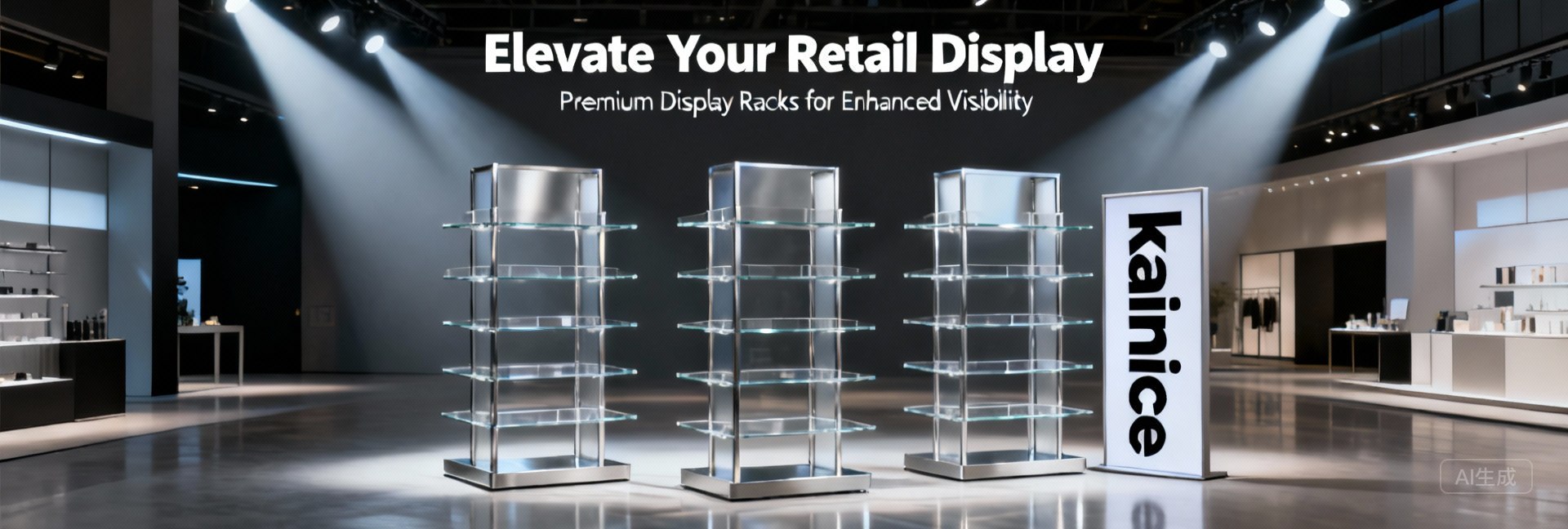
In high-traffic retail environments and modern commercial stores, selecting a heavy-duty, precision-crafted Metal Supermarket Shelf directly impacts merchandise visibility and brand authority.
The Reality of Retail Fixturing: Beyond the Glossy Catalog
I’ve spent 15 years on the shop floor, and if there’s one thing I’ve learned, it’s that a metal supermarket shelf isn’t just a piece of bent steel. It’s the silent backbone of your store’s profitability. When I walk into a retail space, I don’t see products; I see the structural integrity of the shelving. I see whether the uprights are bowing under the weight of canned goods or if the powder coat is already flaking off at the edges. Too many factory owners treat these as commodities. They aren't. They are precision-engineered tools. At kndisplay, we treat every shelf as a load-bearing component that dictates the safety of your customers and the longevity of your investment. If you aren't looking at the gauge, you’re losing money.Engineering Metal Supermarket Shelf Load Capacities and Preventing Shelf Sagging
Ever wonder why discount display racks start wobbling after two weeks? It’s rarely a mystery. It’s almost always a failure to account for static versus dynamic loads. A shelf holding 50kg of static weight is one thing; a shelf that gets slammed with 50kg of merchandise by a stocker in a rush is an entirely different beast. We had a client once—a mid-sized grocery chain—who tried to save a few pennies by opting for 22-gauge steel instead of our standard 18-gauge for their heavy-duty gondola units. They wanted to stock heavy glass jars of pasta sauce. The result? Within three weeks, the shelf sagged by 12mm in the center. It looked like a hammock. The kicker is that when the shelf bows, the locking tabs at the rear of the bracket lose their perpendicular bite into the upright slots. That’s how you get a catastrophic failure. At kndisplay, we enforce a strict load-test protocol: every tier must support 110lbs (50kg) with a maximum deflection of less than 2mm. If it bows more than that, it doesn't leave the floor. Is saving $3 on metal gauge really worth a $10,000 product spill and a potential liability lawsuit? Don't do it. It’s a big mistake.Material Selection Pitfalls in Metal Supermarket Shelf Manufacturing
Here is the truth about cold-rolled steel: not all of it is created equal. I see manufacturers using recycled blends that have inconsistent carbon content. This makes the metal brittle. When you go to bend that flange or punch the mounting holes, the metal can micro-crack. You might not see it immediately, but six months of retail traffic and vibration will turn those micro-cracks into full-blown fissures. Then there is the powder coating. This isn't just for looks. A proper finish should be between 60-80μm thick. Anything less than 50μm, and you’re looking at oxidation within a year, especially in humid environments or stores that use harsh cleaning chemicals. We use a multi-stage iron phosphate pretreatment before the powder hits the booth. If you skip the chemical wash, the powder won't bond. It’ll chip the first time a shopping cart bumps into it. When we audit competitor fixtures, we often see a "thin-skin" coat—maybe 30μm. It looks fine on day one, but give it a scratch with a key, and it peels like a sunburn. That is a hallmark of a manufacturer cutting costs at the expense of your store’s image.Cold-Forming vs Hot-Bending: Metal Supermarket Shelf Production Techniques
In our shop, we stick to cold-forming. Why? Because hot-bending—while easier on the machinery—reintroduces heat-affected zones that can weaken the molecular structure of the steel. When you’re dealing with high-precision retail fixtures, you need that cold-worked stiffness. We utilize CNC laser cutting with tolerances set at ±0.2mm. Precision matters because these shelves are modular. If the shelf width is off by even 1mm, the gondola uprights will be pulled inward or pushed outward, putting the entire aisle out of plumb. I’ve seen store managers spend three hours trying to level a single aisle because the manufacturing tolerances were "loose." It’s an absolute nightmare. At kndisplay, we use laser-indexed jigs to ensure that every shelf bracket aligns perfectly with the upright punch-outs every single time. If the alignment is off, the shelf won't seat properly, and you lose that critical "snap-fit" security that keeps the unit rigid.Reducing Freight Damage and Installation Failures in Metal Supermarket Shelf Procurement
Shipping metal is expensive, and shipping air is a waste of money. However, the move toward "flat-pack" has led to a race to the bottom in packaging quality. If your shelves arrive with warped flanges or bent corners, your installation team is going to hate you, and your shelves will never sit level. We’ve moved to a high-density, pearl foam edge protection system for every pallet. We don't just stack them and shrink-wrap them. Each tier is separated by corrugated dividers, and the corners—the most vulnerable parts—are reinforced with high-impact plastic guards. When you receive a shipment, here is my checklist for you:- Check the squareness: Place a framing square against the back flange and the side bracket. If it’s not a perfect 90 degrees, the shelf was dropped or poorly manufactured.
- Inspect the weld points: If you see "cold welds" (where the bead looks like it’s just sitting on top of the metal rather than penetrating it), reject the batch. That will snap under load.
- Verify the gauge: Keep a digital caliper in your warehouse. If the spec says 18-gauge, verify it. Some suppliers will give you 20-gauge and hope you don't notice the difference.

[Figure] Metal Supermarket Shelf commercial showroom deployment & structural details (Fabrication: kndisplay)
Scene: Matte black powder-coated steel shelving with brushed gold edge detailing displays premium glass-bottled artisanal skincare. 3000K recessed LED spotlights highlight products against a minimalist terrazzo backdrop. Captured in 8k, soft depth of field, professional commercial catalog aesthetic, ultra-detailed craftsmanship.
💡 Factory Veteran Tip:
Every retail chain and storefront layout has distinct footprint constraints and load-bearing requirements. Before signing off on bulk Metal Supermarket Shelf manufacturing orders, always demand certified load analysis drawings and a physical sample evaluation. At kndisplay, our engineering team provides free prototype evaluations and B2B fixture consulting for brands worldwide.