
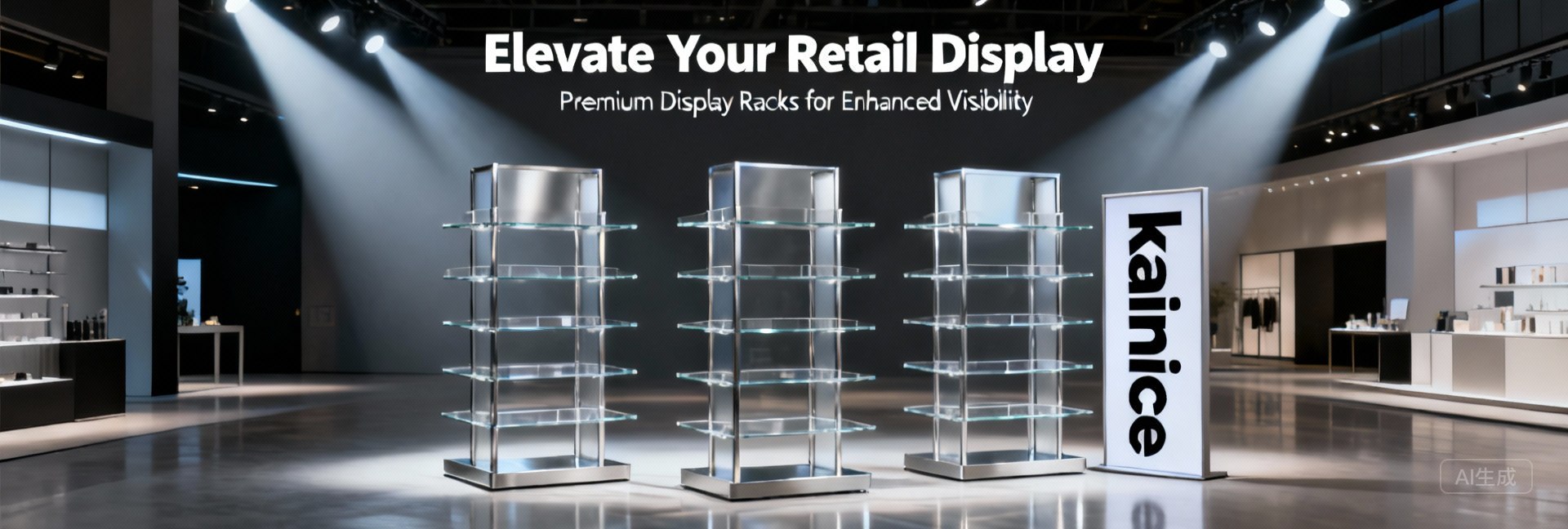
Listen, if you've spent any real time in retail procurement, you already know the drill. Tracking down a dependable factory for an acrylic display stand usually feels like a second full-time job. I've wasted the better part of 15 years choking down awful instant coffee with factory bosses across Guangdong, arguing myself hoarse over edge-polishing specs. Let me save you the migraine. Sourcing these fixtures isn't just about hunting for the lowest bid. It's mostly about dodging the suppliers who will happily ship you a container of cloudy, scratched-up plastic that makes your entire brand look like a bargain bin special.
What is the realistic unit cost for a custom Acrylic Display Stand when ordering in bulk?
Pricing is all over the place, mostly because "acrylic" covers everything from a tiny lipstick holder to a massive floor unit. Let me give you some actual numbers pulled straight from my recent sourcing trips. For a heavy-duty tile display stand meant for retail showcases, I recently pulled quotes around US$ 55 per piece with a 100-piece MOQ from a solid supplier out of Zhongshan. Keep in mind, though, that price is almost always FOB. You still have to factor in ocean freight and local drayage before it hits your dock.
Flip the script to smaller promotional items, and the economics shift entirely. I worked with a Dongguan supplier who quoted under $0.11 per piece (roughly ¥0.79) for custom holographic acrylic standees, though their MOQ was a tiny 5 pieces. Need a premium umbrella display stand for an event? Expect to pay closer to US$ 38.9 per piece at a 50-piece MOQ. You really do get what you pay for in this business. Stop expecting a massive $50 floor unit to cost the same as a plastic keychain.
How do I avoid the common quality traps when sourcing an Acrylic Display Stand from China?
The biggest trap I see? Buyers mixing up extruded acrylic with cast acrylic. Extruded is cheaper, sure, but it yellows faster and cracks under stress. If your acrylic display stand is going to bake under hot retail spotlights all day, you need to specify cast acrylic. I've watched too many buyers get burned when their shiny new fixtures turn a sickly yellow after just three months. Sound familiar?
Then there's edge finishing. You want diamond polishing, not just a quick flame polish. Flame polishing leaves those ugly micro-bubbles at the joints and looks incredibly cheap. Always demand to see material certifications before you wire a single cent as a deposit. If a supplier won't share their ISO 9001 or SGS test reports upfront, just walk away. It's a dead giveaway that they're hiding something about their raw material sourcing or cutting corners with recycled scrap.
What should I expect for MOQ and lead times on a customized Acrylic Display Stand?
Lead times are where amateur buyers completely lose their minds. A reputable factory will give you a realistic delivery window of about 15 workdays for standard designs. I've worked with Billionways out of Zhongshan, and they consistently hit that 15-day mark for ODM and OEM orders. If a supplier tells you they can knock out a fully custom unit in 5 days, they're either lying to your face or outsourcing it to a buddy's garage.
As for MOQ, it all hinges on the customization level. Just tweaking the dimensions of an existing mold? 50 to 100 pieces is standard. But if you want a completely unique shape that requires new CNC programming or thermoforming molds, expect the factory to push for a 300 to 500 piece minimum. They have to justify the machine setup time somehow.
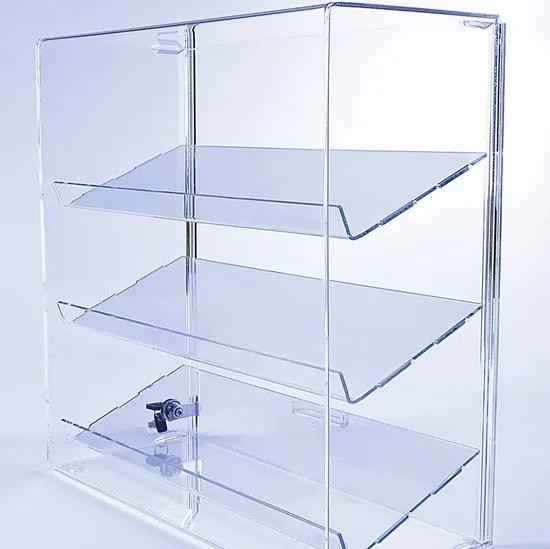
Which manufacturing regions in China actually produce the best Acrylic Display Stand for retail use?
Geography matters way more than most people realize. Need heavy commercial equipment, floor displays, or large showcase units? You want to be looking at Zhongshan or Foshan in Guangdong province. These areas are packed with established factories that actually understand structural integrity and heavy-duty retail environments. They have the heavy machinery required for bending thick sheets and welding large joints without snapping.
On the other hand, if your project involves intricate, small-batch items like cosmetics organizers, jewelry showcases, or those anime holographic standees, Dongguan and Shenzhen are your best bets. The supply chain out there is optimized for precision laser cutting and high-end finishing. Don't try to source delicate cosmetic displays from a factory that primarily makes warehouse pallet racks. The tooling and expertise are just completely different.
How do I verify if a supplier is a true factory or just a trading company for my Acrylic Display Stand order?
This is the oldest game in the book. Trading companies will slap a factory name on their Alibaba profile and mark up the price by 20%. Here's my favorite trick to catch them: I ask the sales rep for a live WeChat video call right then and there. Then I ask them to walk out onto the production floor and show me the laser cutting machines.
If they suddenly make excuses about the factory being busy or located in a different city, they're a middleman. A real manufacturer is proud of their shop floor. Guess what happens when you push a real factory owner? They'll happily walk you through their CNC machines and show you their raw material storage. Also, check their business license scope. If it only lists sales and wholesale without production or manufacturing, you're dealing with a trader. Plain and simple.
What are the biggest mistakes buyers make when designing their first Acrylic Display Stand?
Overcomplicating the design is the number one sin. I had a client who wanted a massive, multi-tiered acrylic display stand with curved joints and hidden LED channels. The prototype cost a fortune, and the final product was so fragile it shattered during transit. Keep the geometry simple. Straight lines and 90-degree joints are cheaper to produce, much stronger, and way easier to pack flat for shipping.
The second mistake? Ignoring the packaging specs. Acrylic scratches if you look at it wrong, and it snaps if the cardboard isn't reinforced. Always mandate that the factory uses PE foam or EPE pearl cotton for individual wrapping, and pack them in double-wall corrugated export cartons. If you skimp on packaging to save fifty cents a unit, you'll lose dollars on damaged goods when the container finally arrives at your warehouse.
Never forget about weight distribution, either. I've seen beautiful tall stands tip over right on the retail floor because the base was too narrow for the product load. Always ask the factory to do a basic center-of-gravity calculation. If the stand holds heavy items at the top, the base needs to be weighted or widened. It's a simple physics problem, but it ruins a lot of otherwise great retail displays.