
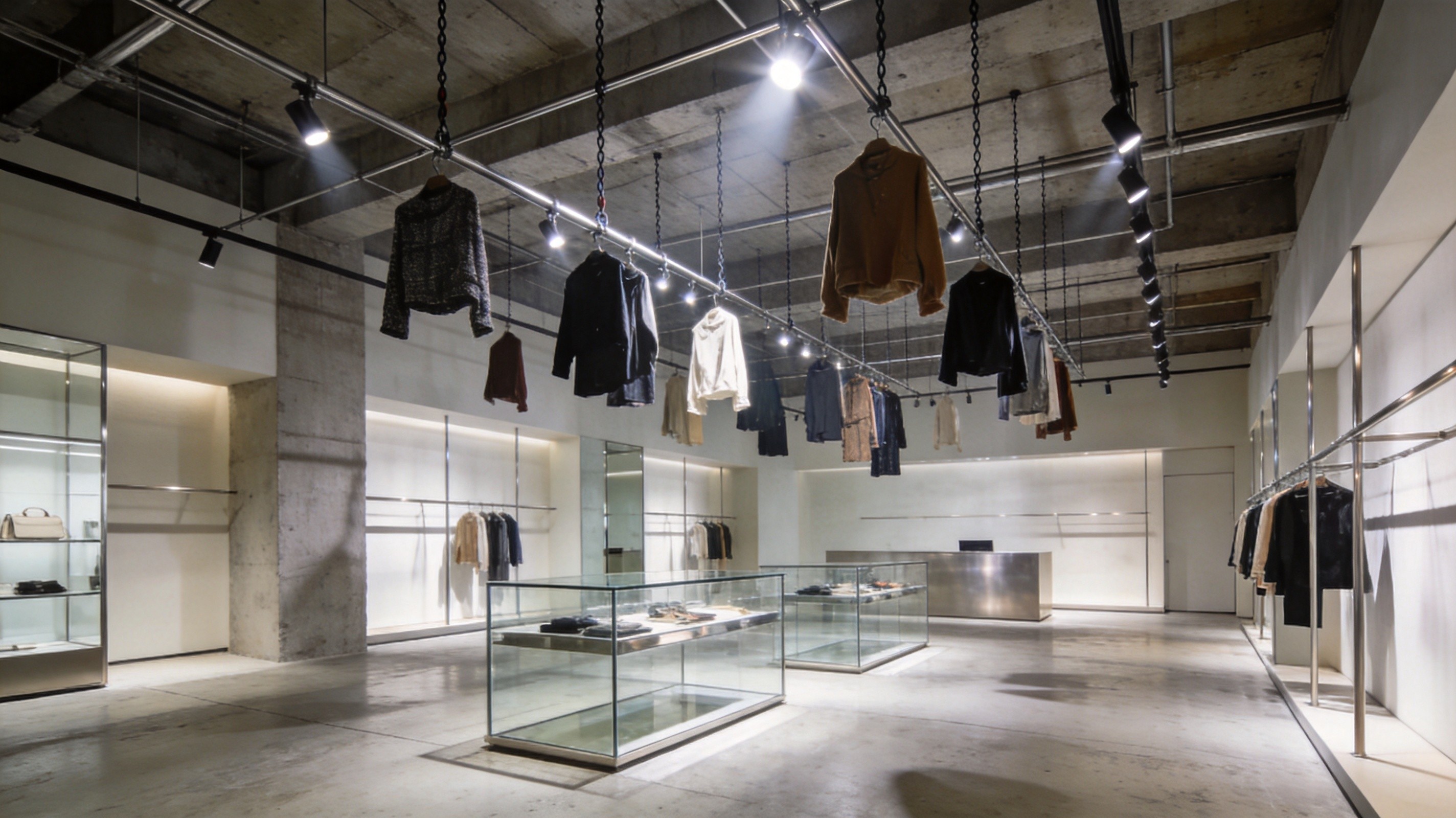
Floor space is the most expensive asset in any clothing store, yet a surprising share of it disappears beneath the feet of rolling rails, gondolas, and stock carts. A Ceiling Hanging Clothes Rack solves the problem from a different direction: it lifts the display overhead, lets garments float at natural eye level, and keeps sightlines open from the storefront window all the way to the back wall. For boutiques, multi-brand stores, and pop-up concepts, this single change can unlock display capacity without moving a single wall.
Why Retailers Are Moving Their Displays Overhead
The appeal is practical, not just aesthetic. When garments hang from above instead of standing on the floor, three things happen at once:
- The floor plane stays clear, so aisles feel wider and customers browse longer instead of sidestepping fixtures.
- A well-stocked overhead rail reads as abundance, signaling depth of inventory the moment shoppers walk in.
- Cleaning, restocking, and re-merchandising become faster because there are no bases or feet to work around.
A properly positioned ceiling mounted clothing rack also removes the protrusion problem of wall-mounted rods, which can eat two to three feet of a narrow aisle and quietly push foot traffic past your best-selling wall.
Main Types of Ceiling Hanging Clothes Racks
Not every store needs the same hardware. Most projects fall into one of these categories:
- Fixed ceiling-mounted rails: a rod fixed to ceiling plates on brackets — simple, rigid, and the most economical choice for permanent display zones.
- Adjustable chain or cable systems: an adjustable ceiling hanging clothes rack uses chains or steel cables to set the hanging height anywhere between roughly 150 and 180 cm, which suits mixed garment lengths such as dresses versus shirts.
- Dual-rod suspended units: two rails hung at slightly different heights create layered, gallery-style presentations and double capacity in the same overhead footprint.
- Retractable or pulley systems: the rail lifts toward the ceiling when not in use — ideal for back-of-house stock zones or compact spaces that change function during the day.
- Track and drop-pipe systems: industrial pipe or U-shaped configurations that combine hanging with a raw, architectural look favored by streetwear and denim brands.
- Floor-to-ceiling tension poles: technically not ceiling-anchored; they brace between floor and slab and are useful where drilling is restricted.
Installation and Load-Bearing: Get These Right First
A heavy duty ceiling hanging clothes rack is only as strong as what it is fixed into, so treat installation as an engineering step, not an afterthought:
- Anchor into solid structure. Brackets must land on wood joists, concrete slabs, or steel decking — hollow drywall alone will eventually fail under a loaded rail.
- Locate the structure before you choose the position. Joist spacing of 16 or 24 inches on center may shift your rail line by a few inches, so plan the merchandising layout around the structure rather than the other way round.
- Respect the rated load. Check the capacity of both the rod and the suspension hardware, and keep the heaviest garments such as coats and denim within the rating. Overloading causes sagging and slow bracket failure.
- Distribute weight with multiple suspension points on longer bars, typically every 60 to 90 cm.
- Set display height around 150 to 180 cm so garments sit at eye level while staff can still reach the top hangers comfortably.
- Choose 304 or 316 stainless steel, or powder-coated steel, in humid coastal or laundry-adjacent environments to prevent corrosion over time.
Where These Racks Perform Best: Boutiques, Multi-Brand Stores, and Pop-Ups
In a boutique hanging rail setup, a single centered rail with seven to nine pieces arranged light to dark and short to long turns a window or feature wall into a curated composition. Leave negative space: if you think you need twelve pieces, try eight first and let each garment breathe.
Multi-brand and collection stores use a suspended garment rail to separate stories visually. Two parallel rails at staggered heights let bold pieces sit above supporting textures, and each brand keeps its own hanging line without a single floor-standing fixture crowding the aisle between them.
Pop-up shops benefit from modular drop-pipe or track systems that mount quickly, display heavily, and disassemble cleanly for the next venue. Because the hardware leaves the floor untouched, even a small temporary space still reads as open and shoppable from the street.
Pairing Ceiling Displays with Floor Fixtures
The strongest retail layouts are hybrids. Many store owners hang the bulk of stock overhead and keep a small number of floor units for interaction:
- Use the hanging garment display for the visual range and color story customers see from the entrance.
- Reserve rolling rails or wall systems near the fitting rooms for try-on flow and impulse add-ons.
- Place folded tables or shelving beneath taller overhead runs only if they stay low, so the garments above remain visible.
- Keep at least one clear sightline from window to back wall — overhead hardware preserves it, floor units can block it.
A Sourcing Checklist for Wholesale Buyers
For store owners, brand buyers, and distributors comparing suppliers, evaluate every ceiling hanging clothes rack system against the same short list:
- Material and finish: stainless steel, carbon steel with powder coating, or brass tones — matte black and brushed gold remain the most requested retail finishes.
- Verified load data: ask for tested capacity figures per meter, not just per rack.
- Hardware included: ceiling plates, expansion anchors, and cable tensioners should ship with the rack, matched to your ceiling type.
- Customization depth: length, drop height, shape — straight, U-shaped, or staggered — plus logo etching should be available under OEM and ODM terms.
- MOQ and lead time: flexible minimums matter for multi-door rollouts and seasonal refreshes.
- Project support: suppliers who provide shop drawings and load calculations save weeks of back-and-forth with installers.
Working with a factory that engineers and finishes its own racks — as Kainice does for retail clients worldwide — keeps tolerances tight and makes mid-project changes painless. Before committing to a full store package, request a sample rail, confirm the load test report, and loop your installer into the drawing review from day one.