
Walk into a successful fashion boutique and something feels right within seconds: you know where to look, what is new, and how the pieces go together. That is the quiet power of a well-planned clothing store display. For apparel retailers, brand buyers, and wholesale distributors, display is not decoration — it is a selling system that shapes how long customers stay, how much they browse, and ultimately how much they buy. This guide breaks down the display strategies, fixture types, and layout principles behind stores that convert, and explains when it makes sense to invest in custom fixtures.
Why Your Display Strategy Decides the Sale
Most underperforming stores do not have a product problem; they have a presentation problem. Racks placed without a plan, garments packed too tightly, and no clear focal point push customers into "skim mode" — they glance around, feel overwhelmed, and leave without touching anything. Retail studies consistently show that spatial layout, lighting, and fixture quality directly influence browsing time and purchase decisions.
A strong display strategy does three jobs at once:
- Guides attention, so customers' eyes land on hero products first instead of clutter.
- Reduces shopping effort, letting shoppers find categories without asking staff for help.
- Raises perceived value, because space, light, and consistent fixtures make ordinary products feel premium.
Proven Clothing Store Display Strategies for Retailers
The best clothing store display ideas all share one principle: make the store easy to shop. These tactics work equally well in boutiques, mall stores, and larger formats:
- Zone by shopping logic. Group products by category, occasion, or lifestyle — new arrivals near the entrance, workwear together, weekend looks together. Clear zones help customers browse both faster and wider.
- Sell outfits, not single items. A styled mannequin showing shirt, trousers, and belt communicates fit, proportion, and styling in one glance, while cross-merchandised accessories nearby lift average order value.
- Build color stories. Sequencing garments from light to dark, or in complementary color blocks, creates visual flow and makes a wall readable from across the store.
- Edit ruthlessly. Overfilled racks hide product and cheapen the entire store; leaving breathing room increases perceived value and invites touching.
- Rotate displays regularly. Move hero pieces, restyle mannequins, and refresh the window every few weeks so returning shoppers always discover something new.
Essential Fixture Types for Apparel Retail
Effective visual merchandising depends on mixing fixture formats rather than repeating one. Each type plays a different role on the sales floor:
- Garment racks. Single-rail racks present clean size runs, 4-way racks create entrance focal points, double-rail units double capacity, and rolling racks handle seasonal changeovers. Heavy-duty construction keeps rails straight and displays stable.
- Display tables. Ideal for folded denim, knitwear, and T-shirts; nesting tables at varied heights add depth and create natural focal points in open floor areas.
- Wall display systems. Slatwall, gridwall, and adjustable rail systems turn vertical space into selling capacity — especially valuable in compact boutiques where floor space is tight.
- Mannequins and body forms. Full-body, torso, and headless forms show how garments actually fit and move; position them close to the products they feature so inspiration converts immediately.
- Checkout and impulse units. Compact counter displays for socks, belts, and accessories capture customers who are already in buying mode.
- Integrated lighting. Accent spotlights and LED strips built into shelves and cabinets reveal fabric texture and true color far better than flat overhead light.
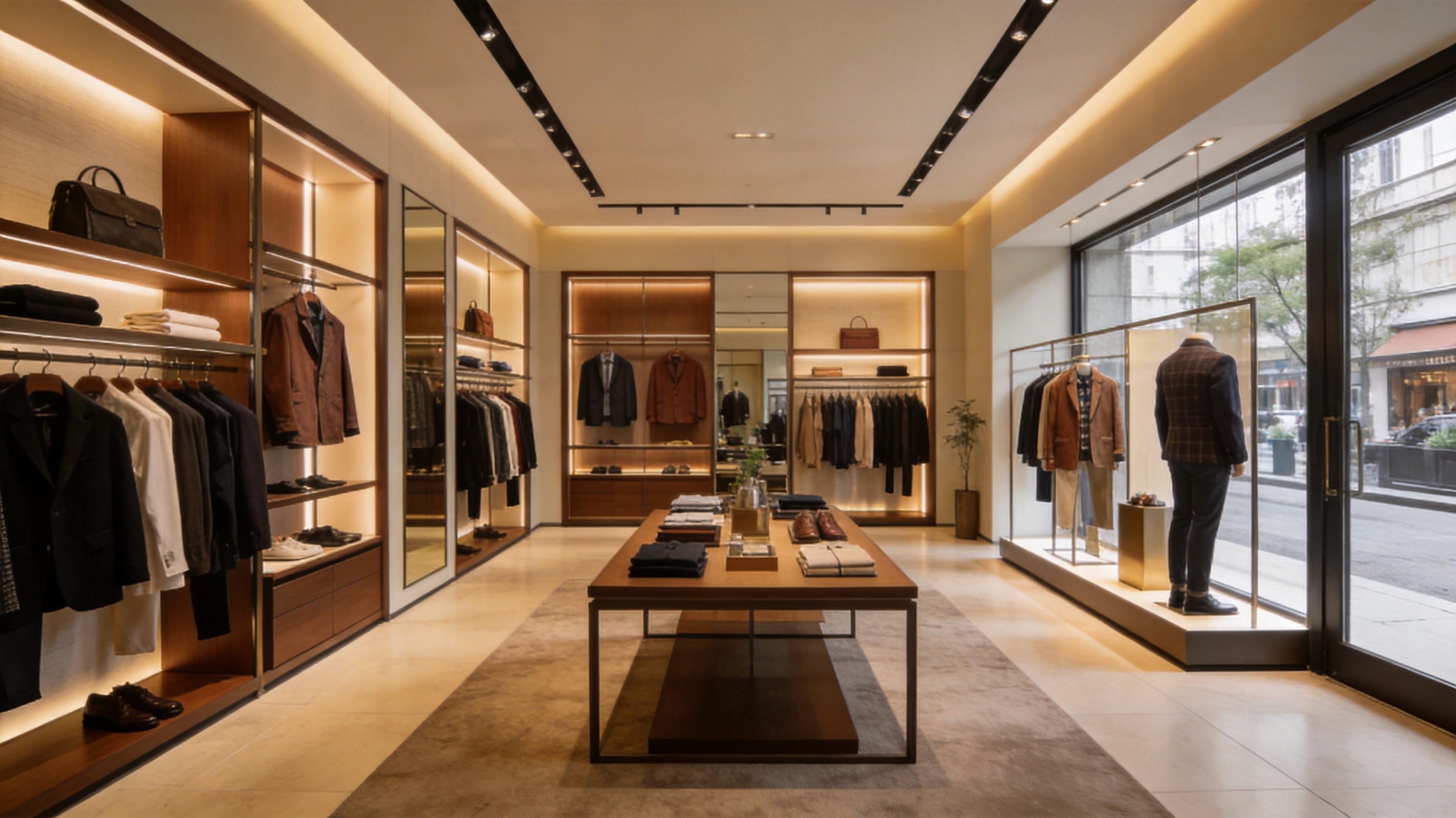
Customer Flow and Visual Focal Points
Great store layout design is about clarity, not creativity. When shoppers walk in, they should instantly see something interesting, understand where things are, and move naturally deeper into the space. A few layout principles make this happen:
- Respect the decompression zone. Keep the first few steps inside open and uncluttered so customers can orient themselves before meeting merchandise.
- Lead with a hero display. One styled mannequin or themed feature near the entrance gives the eye an anchor — if everything shouts, nothing is heard.
- Plan the path deliberately. Loop layouts push traffic past every zone, while free-flow layouts invite relaxed boutique browsing; either way, keep walkways wide enough for two people to pass comfortably.
- Use light as a directional tool. Shoppers instinctively look where it is brighter, so aim accent lighting at new arrivals and high-margin pieces.
- Revive dead corners. A mirror, a small feature table, or improved lighting can turn ignored corners into genuine browsing stops.
Why Custom Display Solutions Are Worth the Investment
Standard fixtures can fill a floor, but they rarely fit a brand. Off-the-shelf racks are designed for "any store," which means they fit yours imperfectly — wrong heights, wasted corners, finishes that clash with your identity. Working with an experienced manufacturer of custom display fixtures changes that, because every element is engineered around your actual floor plan, product mix, and brand style.
For retailers, distributors, and brand owners sourcing at scale, partnering with an OEM/ODM display fixture manufacturer in China brings clear advantages:
- Brand-consistent design, with fixtures matched to your finishes, colors, and logo elements, from brushed metal racks to illuminated feature walls.
- Space-precise engineering, so pieces arrive built to your measurements instead of forcing you to adapt the layout to the fixture.
- Modular flexibility, letting you reconfigure zones for seasonal campaigns without rebuilding the store.
- One-stop production, where design, prototyping, metal fabrication, woodwork, powder coating, and assembly happen under one roof for consistent quality and shorter lead times.
- Scale economics, with factory-direct pricing and flexible MOQs protecting your budget across multi-store rollouts.
What to Check Before Choosing a Fixture Partner
Before committing to any display fixture supplier, evaluate them on the points that matter most in apparel retail:
- Case studies from clothing stores, boutiques, and fashion chains — not just generic retail work.
- In-house design and prototyping, so your drawings become physical samples quickly.
- Full production capability covering metal, wood, acrylic, and LED integration.
- Clear MOQ, packaging, and shipping terms for international orders.
- A willingness to provide samples or small trial batches before mass production.