
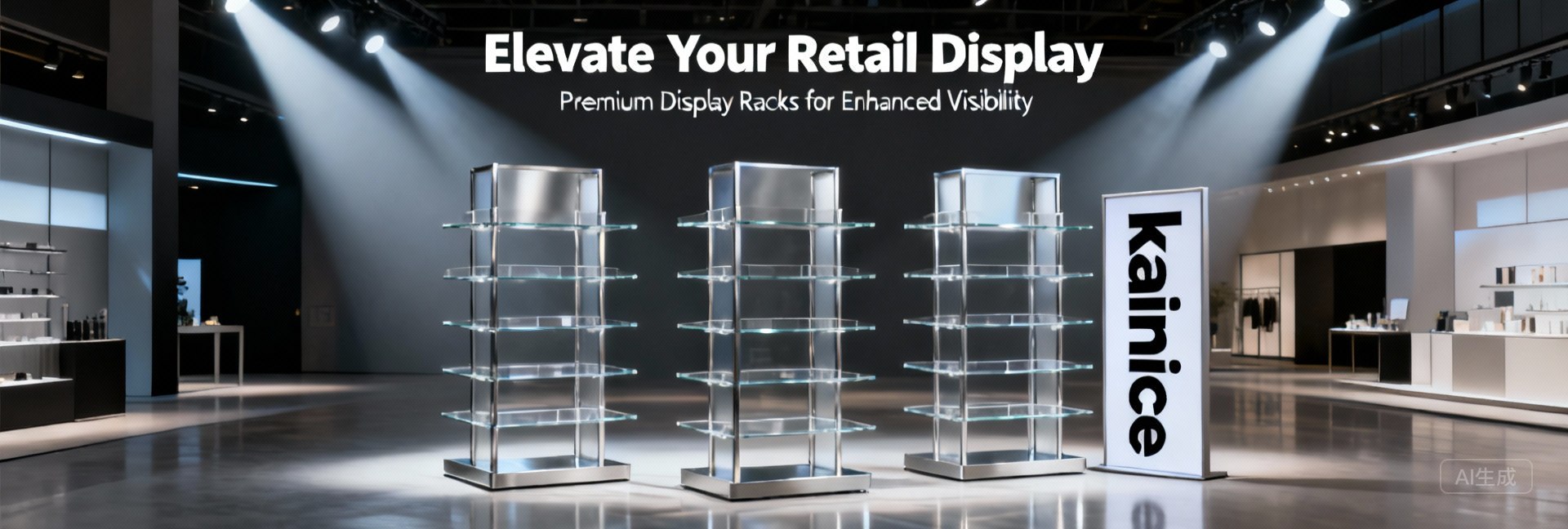
Fifteen years in retail fixture sourcing, and I still lose my mind over how often buyers get completely blindsided by bespoke boutique clothing display fixtures. You scroll through glossy catalogs, spot some sleek gold-frame racks, and assume the hard part is over. Spoiler alert: it isn't. Next thing you know, you're unloading a shipping container full of wobbly metal that reeks of cheap paint.
What is the realistic price range per meter for bespoke boutique clothing display fixtures when ordering in bulk?
Pricing is exactly where rookies get slaughtered. Sourcing from top-tier manufacturers in Guangzhou or Foshan means you have to know the difference between per-set and per-meter quotes. I pulled some numbers for a client last week, and they paint a pretty stark picture of economies of scale.
Expect to pay around $118 USD per meter for a standard custom gold frame garment display system if you're only ordering 5 to 49 meters. Commit to a larger volume, though, and that drops to roughly $90 USD per meter. Sure, some Foshan suppliers will quote you $17 USD for basic standalone sets. But don't expect premium finishes at rock-bottom prices.
| Order Volume | Price Per Meter (USD) | Basic Set Price (USD) |
| 1 to 4 Sets | N/A | $17 - $120 |
| 5 to 49 Meters | $118 | N/A |
| 50+ Meters | $90 | N/A |
My advice? If someone quotes $30 per meter for a fully customized, heavy-duty brass system, walk away. They're either cutting corners with hollow, flimsy tubing, or they're going to ambush you with hidden mold fees down the line.
How do I verify the material quality of a custom gold frame garment display system before committing?
This is where the war stories come out. A boutique owner in Texas asked me to help source a beautiful set of bespoke boutique clothing display fixtures last year. The supplier sent a flawless sample. The bulk order? They swapped in 201 stainless steel instead of 304. Coastal humidity did the rest—the gold plating started peeling within three months.
Demand a material test report before production kicks off if you want to avoid this nightmare. Specifically, ask for XRF testing results that prove the frames are actually 304 stainless steel or solid brass. As for the shelves, make sure they're using high-density MDF finished with proper acrylic or tempered glass. Skip the cheap, brittle plastic.
I always tell my clients to jump on a video call while the factory is inspecting materials. If the sales rep refuses or starts making excuses, just hang up and move on. Pretty simple, right?
What is the standard MOQ and lead time for bespoke boutique clothing display fixtures from top-tier manufacturers?
Time is money in retail fit-outs, so let's talk about it. Verified suppliers in Guangdong—Guangzhou Showcases display Ltd comes to mind—usually offer a pretty flexible Minimum Order Quantity. You can often start with an MOQ of just 1 set for prototyping. It's a great way to test the waters without bleeding cash.
Move to bulk production, though, and that MOQ jumps to 5 to 49 meters of linear display space. Lead times sit at a realistic 25 to 35 days for production once you sign off on the final CAD drawings. Ignore any supplier promising a 15-day turnaround for fully bespoke boutique clothing display fixtures. Unless they're just grabbing pre-made stock from a warehouse and slapping a logo on it, they're lying.

I build a two-week buffer into every project timeline. Shipping delays happen. Customs holds happen. Random factory power outages happen. Your store opening date? It won't wait for any of them.
Can I truly customize the finish and dimensions of these metal clothing racks, or am I just picking from a catalog?
Here's the catch with true customization. Plenty of factories claim they do custom work. What they actually mean is partial customization. They'll let you tweak the powder coating color or swap acrylic shelves for wood. The underlying frame structure, though? Exactly the same as their catalog.
Want a truly unique set of bespoke boutique clothing display fixtures? You need a supplier capable of customization from design. That means taking your architect's CAD files, engineering the structural load-bearing points, and building custom welding jigs for your specific gold frame geometry. You can't get that from a trading company. You need a factory with in-house engineers.
I always ask to see their design-to-production workflow. If they can't show you exactly how their engineers translate a sketch into a manufacturing blueprint, they're just a middleman. And middlemen just add 20 percent to your costs without bringing any real value to the table.
What are the most common mistakes retail buyers make when sourcing bespoke boutique clothing display fixtures from overseas?
Buyers make the same costly errors every single week. The biggest? Failing to specify the packaging and loading plan. Gold-finished metal fixtures scratch if you look at them wrong. If the factory just wraps them in thin plastic and tosses them into a container, your gear will arrive looking like it survived a bar fight.
Mandate pearl cotton wrapping, corner protectors, and custom wooden crates for the heavy pieces. Another massive mistake is ignoring the weight capacity of the hanging rails. I've watched racks collapse under heavy winter denim because a supplier cut corners and used a 1.0mm thick tube instead of a 1.2mm one.
Always ask for a detailed packing list and a 3D loading simulation before they seal the container. It takes the factory maybe two hours to generate it. That two hours saves you thousands of dollars in damaged goods.
Which specific certifications should I demand to ensure my fixtures meet international retail standards?
Compliance isn't optional. Especially if you're opening stores in Europe or North America. Your supplier has to provide valid EU compliance documentation. That usually means REACH and RoHS certificates for the materials and finishes. It ensures your gold plating and powder coatings aren't leaching toxic chemicals.
You also want to see the factory's ISO 9001 quality management certification. It proves they actually have standardized processes instead of just winging it on the production floor. For the metal materials themselves, an SGS or TUV test report is the gold standard for verifying steel grades and welding strength.
If a supplier won't share their certification docs upfront without you having to beg, that's a massive red flag. Legitimate manufacturers like Foshan Nanhai Guicheng Yuntai Shelf Factory have these documents ready to go. They're proud of their compliance record when sourcing bespoke boutique clothing display fixtures. Don't settle for anything less.