
Boutique Shelving and Display Units: A Procurement Guide for Retail Buyers
When sourcing boutique shelving and display units for your retail store, the procurement landscape offers a wide range of manufacturers, materials, and price points. Retail buyers, store owners, and procurement managers navigating the global supply chain—particularly suppliers listed on Alibaba and Made-in-China—need to evaluate quality, MOQ requirements, customization options, and certification compliance before placing bulk orders. This guide breaks down the key manufacturers, material specifications, pricing structures, and certification standards that matter most when investing in boutique shelving and display units for your boutique or specialty retail environment.
Key Manufacturers and Suppliers in the Boutique Display Market
The boutique display fixture market is concentrated among several established Chinese manufacturers with proven export track records. Ownway Display Equipment, based in Guangzhou, is one of the most versatile suppliers, offering a comprehensive product range that includes display hooks, garment racks, tubes, and tube connectors—components that allow procurement managers to build modular shelving systems tailored to specific store layouts. Their tube-and-connector system is particularly attractive for retailers who need flexible, reconfigurable display units that can adapt to seasonal merchandising changes.
Another notable supplier is Suzhou Kasa Fashion Model Props Co., located in Jiangsu province and established in 2024. Kasa focuses on fashion-forward display props and boutique-specific fixtures, catering to retailers who prioritize aesthetic sophistication. Procurement teams evaluating newer manufacturers should request factory audit reports, sample units, and export client references to validate production capacity and quality consistency.
Material Options: MDF, Tempered Glass, Stainless Steel, and Solid Wood
Material selection directly impacts both the unit price and the visual merchandising quality of your custom boutique display shelving. The four primary materials available from Chinese manufacturers each serve different retail categories:
- MDF (Medium-Density Fiberboard): The most cost-effective option, ideal for painted finishes in matte black or brushed gold. MDF units typically fall in the $50–$150 per unit range and are suitable for apparel, accessories, and lifestyle boutiques.
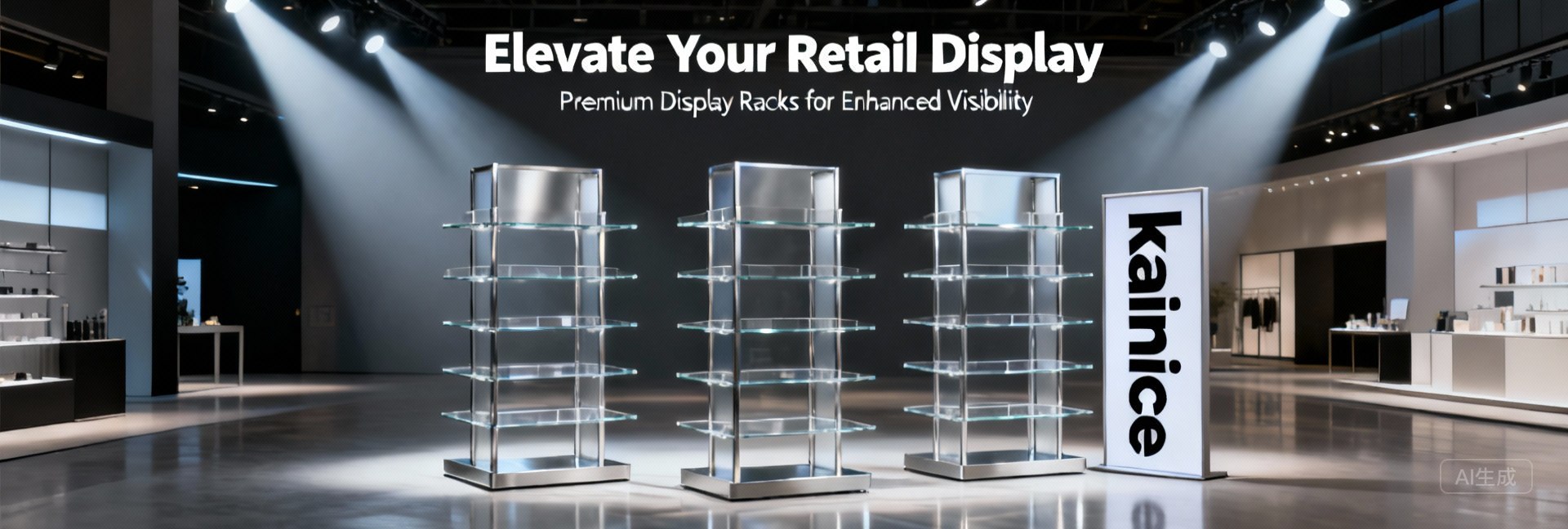
- Tempered Glass: Used for shelving panels and display cases requiring transparency and premium presentation. Tempered glass adds $80–$200 per unit depending on thickness and edge finishing, and is essential for jewelry, cosmetics, and high-end accessory displays.
- Stainless Steel: Preferred for modern, industrial-style boutiques and stores requiring heavy-load capacity. Stainless steel tube systems with connectors offer durability and a clean aesthetic, with prices ranging from $100–$300 per unit.
- Solid Wood: The premium tier, favored by heritage brands and luxury boutiques. Solid wood shelving commands $200–$500 per unit, depending on wood species, grain quality, and finishing工艺.
Procurement managers should also consider mixed-material boutique display units combining, for example, solid wood frames with tempered glass shelves—a configuration that balances visual warmth with product visibility.

Pricing Structure and Minimum Order Quantities
Understanding the pricing matrix is critical for budget planning. The price range for boutique shelving and display units spans from $50 to $500 per unit, driven primarily by material choice, unit size, and complexity of fabrication. Volume discounts are standard, but the MOQ (Minimum Order Quantity) varies significantly by manufacturer and product type.
Most suppliers on Alibaba and Made-in-China set MOQs between 10 and 50 pieces for shelving units. For procurement managers handling smaller boutique chains or single-store operations, the lower end of this MOQ range (10–20 pieces) is achievable but may come with higher per-unit pricing. Larger buyers ordering 50+ units can negotiate unit price reductions of 15–25%, particularly when committing to repeat orders or annual supply agreements.
Custom finishes are often essential for brand alignment. The most commonly available options include matte black (versatile, modern), brushed gold (premium metallic for luxury retailers), and natural wood (clear-coat preserving wood grain for artisanal branding). Custom finishes typically add $10–$40 per unit, depending on the application process and surface area.
Certifications and Compliance Standards
Certification compliance is non-negotiable for export-oriented procurement, particularly when boutique shelving units for North American and European retail markets are subject to safety, environmental, and quality regulations. The two certifications most commonly held by top-tier manufacturers are:
- ISO 9001: The international quality management standard. Manufacturers with ISO 9001 certification demonstrate consistent production processes, quality control protocols, and documented manufacturing procedures. Both Ownway Display Equipment and other established suppliers maintain this certification, providing procurement teams with assurance regarding batch-to-batch consistency.
- FSC (Forest Stewardship Council): Essential for wood-based products, particularly MDF and solid wood shelving. FSC certification verifies that wood materials are sourced from responsibly managed forests. This certification is increasingly demanded by European retailers and is a prerequisite for many large-chain vendor compliance programs.
Procurement managers sourcing for European markets should also verify REACH compliance for any finishes, paints, or coatings applied to shelving units, as chemical substance regulations are strictly enforced in EU member states.
Export Markets and Logistics Considerations
The primary export destinations for Chinese boutique display manufacturers are North America, Europe, and the Middle East. For North American buyers, shipments typically clear through West Coast or East Coast ports, with 25–35 days of ocean transit. Verify that wood products carry the required ISPM-15 fumillation marking for USDA and CBP compliance. For European buyers, FSC certification is often enforced contractually by large chains, and CE marking may apply to units with lighting components. For Middle Eastern buyers, high-humidity environments can affect MDF and certain wood finishes—specify moisture-resistant core materials and UV-stable finishes for stores in GCC countries.