
Listen, my seasoned friends in the retail trade, pull up a chair and let’s have a heart-to-heart. So, you’re thinking of opening a coffee shop? You imagine it’s just about grinding beans and savoring the aroma? Think again—that’s a massive mistake! As the old saying goes, "A mighty horse is useless if the saddle doesn't fit; you’re just riding toward disaster." Today, we aren’t discussing espresso machines or exotic beans from mountains with unpronounceable names. We are talking about the Coffee Display Shelf. You might shrug and say, "It’s just a shelf, what’s the fuss?" Let me tell you: choose the wrong one, and your bank account will weep louder than a customer accidentally served decaf.
Mistake Number One: The "Pretty Face" Trap (Visuals Over Velocity)
Many retail novices walk into a showroom, spot a gleaming, gold-trimmed coffee display shelf, and exclaim, "This is it! This will make my shop look like a palace!" Hold your horses. This is what I call the "Wedding Dress Syndrome"—it looks stunning for a single day, but can you actually live in it? I’ve seen entrepreneurs purchase shelves that resemble modern art sculptures yet hold a mere three bags of coffee. Ask yourself: Are you selling art or caffeine? If your shelf doesn’t facilitate "High-Velocity" sales—allowing customers to grab, pay, and go effortlessly—you aren’t running a business; you’re curating a museum. And let’s be clear: museums don’t pay the exorbitant rent in downtown Beijing or New York.
Is an attractive shelf important? Certainly. But is it more critical than your "Stock-to-Sales" ratio? Absolutely not. I’ve witnessed retailers drop $5,000 on a custom-carved wooden unit, only to watch it warp the moment steam from a milk frother touched it. Now, they own a $5,000 piece of firewood. You must ask: "Does this shelf drive sales, or does it just make me look impoverished while trying to appear wealthy?" If the shelf isn’t ergonomically positioned for the average human reach, or if the lighting makes your premium beans look like charcoal briquettes, you’ve just purchased a very expensive obstacle.
Mistake Number Two: The "One Size Fits Nobody" Disaster (Ignoring Flexibility)
Here is a question I hear often: "Teacher Zhao, should I just buy the standard shelf from the big-box store?" My answer is always the same: "Do you wear the exact same shoe size as your neighbor?" Of course not! The second biggest pitfall in selecting a coffee display shelf is ignoring modularity. Today you might be selling 12oz bags; tomorrow, you could be moving giant gift baskets for the Spring Festival. If your shelves are bolted down as if part of a military bunker, you are in trouble. You need shelving that can shift up, down, and sideways faster than a politician changing their stance.
I once knew a fellow—let’s call him "Big Head Wang." He purchased massive, heavy-duty iron shelves to achieve that trendy "Industrial Look." It took four strong men and a crane just to relocate them. When he realized customers couldn’t see the price tags on the bottom row, he had to hire those same four men to move the entire unit two inches. That isn’t business; that’s a weightlifting competition. A truly retail-ready coffee display shelf must be adaptive. Can it accommodate a seasonal promotion? Can it integrate a digital signage screen next month? If the answer is "No," then that shelf is nothing more than a ball and chain shackled to your shop’s ankles.
Mistake Number Three: Ignoring the "Dust and Grime" Reality (Maintenance Nightmare)
Let’s talk about the stuff nobody wants to mention: cleaning. You think your shop is going to stay pristine? In the world of retail, coffee dust is like a ninja—it gets everywhere. I’ve seen retailers choose these intricate, lattice-work coffee display shelves that have more nooks and crannies than a grandma’s attic. After three weeks, those shelves aren't displaying coffee; they’re displaying a collection of dust bunnies and spilled latte splashes. If your staff has to spend two hours a day Q-tipping the shelf, you’re losing money on labor faster than water through a sieve.
Common question: "How often should I clean my display?" The answer is: every single day! So, why would you buy a shelf that makes it hard? B-end buyers often forget that durability and "clean-ability" are the twin brothers of profit. You want smooth surfaces, moisture-resistant coatings (because, hello, it’s a coffee shop!), and materials that don't scratch when a customer drags a heavy ceramic mug across them. If your shelf looks "distressed" after one month of actual use, it’s not "vintage"—it’s just broken. Choose materials like powder-coated steel or high-grade tempered glass that can take a beating and still shine like a new coin.
The Hidden Cost: Why "Cheap" is Actually the Most Expensive Word
You might be sitting there thinking, "Zhao, I’ll just go to the local market and buy the cheapest thing I find. A shelf is a shelf!" Oh, my naive friend, that’s how you end up crying in the dark. A cheap coffee display shelf is like a cheap pair of dentures—they might look okay when you’re sitting still, but the moment you try to bite into something real, everything falls apart. A cheap shelf will sag in the middle under the weight of your premium beans. It will wobble when a customer bumps it, making your whole shop look like a shaky tent in a windstorm.
Think about the "Cost per Year" not the "Price Today." If a $200 shelf lasts one year and ruins three bags of coffee because it collapsed, and a $800 professional-grade shelf lasts ten years and increases your sales by 10% because of better visibility, which one is actually cheaper? Mathematics doesn't lie, even if people do! In the B2B world, we don't buy "things," we buy "solutions." If your solution creates more problems, it’s not a deal—it’s a debt.
FAQ: Everything You’re Afraid to Ask Your Sourcing Agent
Q: "Can I use residential bookshelves for my coffee shop?"
A: Are you joking? Do you also use a bicycle to pull a freight trailer? Residential furniture is designed for one person to touch it once a week. Retail shelves are touched by hundreds of hands every day. Don't do it unless you want your shop to look like a garage sale.
Q: "How much weight should a coffee display shelf hold?"
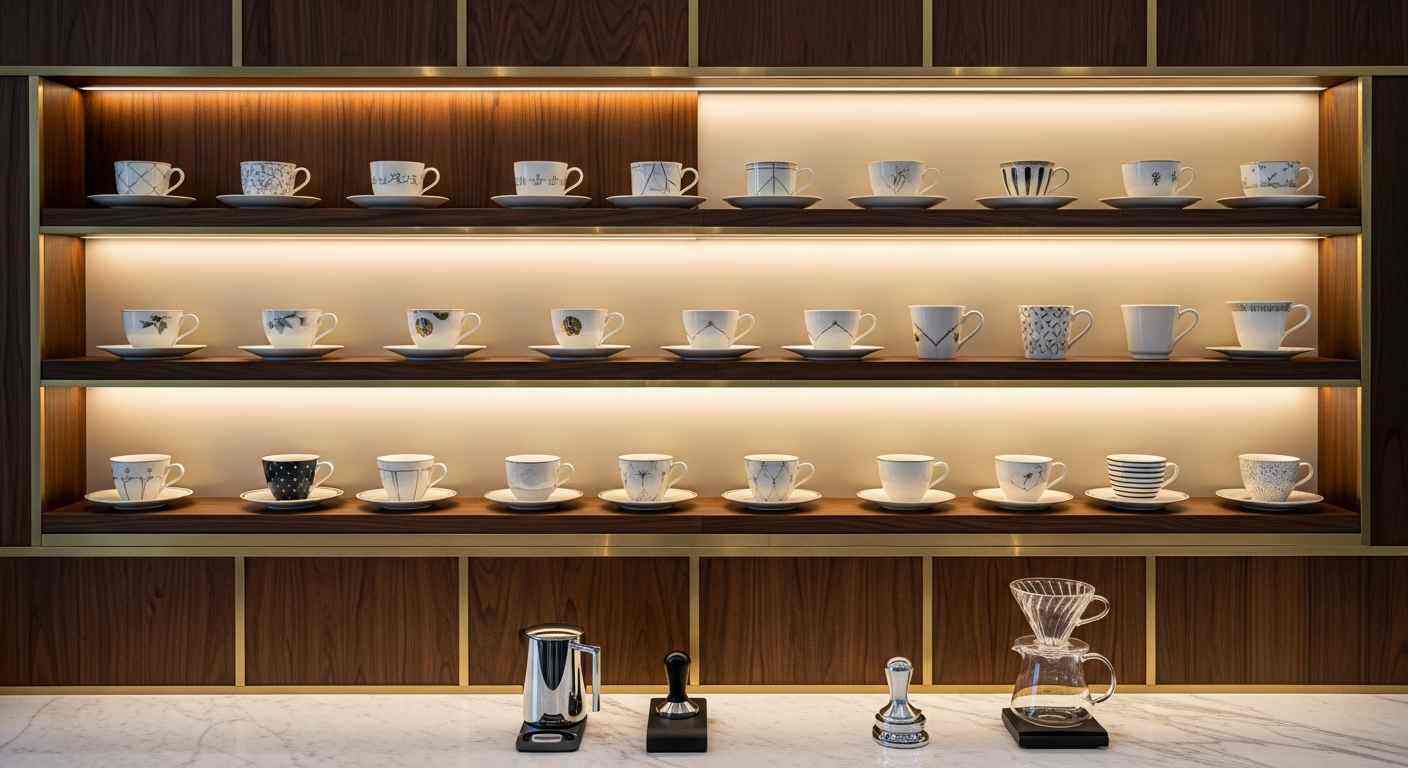
A: A standard bag of coffee might be light, but when you stack 50 of them, plus some heavy porcelain mugs and French presses, you’re looking at serious weight. Your shelf should be rated for at least 50kg per level. Always over-engineer!
Q: "Is LED lighting on the shelf worth the extra cost?"
A: Is the sun worth the light? Of course! Integrated lighting on a coffee display shelf can increase "dwell time" (how long customers look at products) by nearly 40%. It’s the difference between a product looking like a treasure and looking like a leftover.
Don't Be a Penny Wise and a Pound Foolish
your coffee display shelf is the silent salesman of your shop. It doesn't take a lunch break, it doesn't ask for a raise, and it doesn't complain about the boss. But it only works if you choose it wisely. Avoid the "pretty but useless" designs, stay away from the "rigid and heavy" monsters, and for the love of all things caffeinated, make sure it’s easy to clean!
If you’re still confused, don't just stand there scratching your head like a monkey looking at a watch. Go talk to the experts! Look for suppliers who understand the "Retail Flow" and "Load Bearing Requirements." Don't just buy a piece of metal; buy a partner for your brand. After all, when your shelves are full and your cash register is ringing, that’s the most beautiful music in the world.
Would you like me to help you draft a specific "Quality Inspection Checklist" for your next batch of shelf orders, or perhaps a custom layout plan for a 50-square-meter shop?