
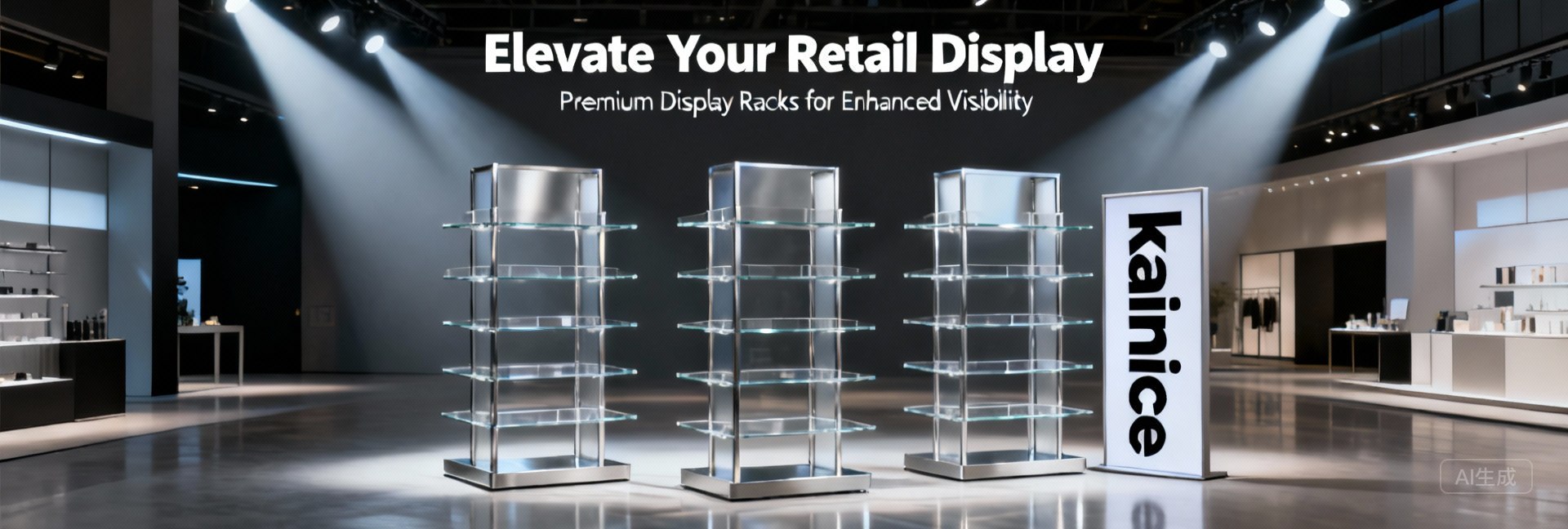
Spend enough time walking the show floor and you'll quickly learn that a flimsy Trade Show Display Stand will torpedo your brand's credibility before the doors even open. Over the last 15 years, I've sourced everything from simple pegboards to massive trade show display stands for retail buyers. I've witnessed the disasters firsthand. Let's skip the supplier marketing fluff and focus on what actually matters when your reputation—and your budget—is on the line.
What is the realistic price range for a custom Trade Show Display Stand without getting scammed?
Pricing in this space is a total mess, and it drives me up the wall. You can snag basic aluminum frame booths from suppliers like Foshan Colike for $28 to $40 a piece, provided you're buying at least five units. Want a fully custom, backlit modular setup from Maxwin Precision Machinery instead? Brace yourself for $300 to $1,000 per set.
Don't assume that massive price gap is just a supplier padding their margins. It isn't. That $30 unit relies on thin, hollow aluminum extrusions that practically bend if you glare at them. The $800 version? Heavy-duty aerospace-grade aluminum, seamless welding, and high-tension stretch fabric. If a vendor quotes you $50 for a 3x6 meter booth, run. You'll just end up eating the cost in replacement parts later.
How do I verify the aluminum quality and RoHS certifications for a modular Trade Show Display Stand?
Nearly every trading company on Made-in-China slaps a RoHS certified badge on their profile. Shanghai Yongjia International Trading claims theirs is valid through late 2025, and Maxwin makes similar promises. But here's the dirty secret: a lot of these guys just download a blank template certificate and Photoshop in their logo.
My rule is pretty simple. Demand the actual test report from a recognized lab like SGS or Intertek, then verify the report number directly on the issuer's website. If they stall, or hand you a blurry PDF, walk away. As for the metal itself, demand the specific alloy grade. You need 6063-T5 aluminum for structural frames. Settle for anything less, and the frame will warp the second you turn on those high-intensity LED light boxes.
What is the actual MOQ and lead time when ordering a portable Trade Show Display Stand from China?
Those archaic days of needing a 500-piece MOQ are long gone. I was checking out TIANYU Exhibition Equipment on Alibaba recently—their modular systems require an MOQ of just 1 square meter, sitting around 995 CNY. Other suppliers, including Maxwin and Foshan Colike, are dropping the MOQ to 1 piece or 1 set for standard promotional booths.
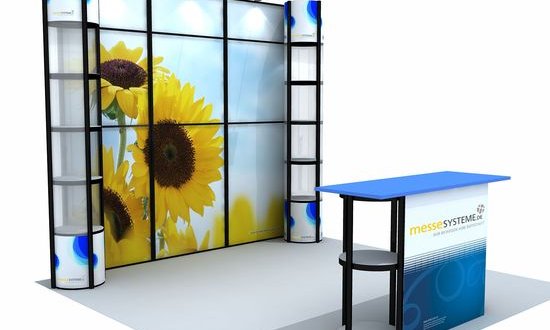
Lead times, though—that's where you have to watch your back. A single sample piece usually takes 7 to 10 days. Order 50 customized sets with your logo printed on the stretch fabric, and that timeline stretches to 20 or 25 days. Always build in a two-week buffer for sea freight delays. Otherwise, your booth will show up after the show doors have already opened.
Should I choose stretch fabric or rigid panels for my backlit Trade Show Display Stand?
I field this question constantly. Rigid panels—think PVC foam board or acrylic—look incredibly sharp up close. They deliver that premium, high-gloss finish luxury brands crave. But shipping them is an absolute nightmare, and packing them into a standard carry-on case is practically impossible.
For 90% of my B2B clients, though, I push them toward SEG (Silicone Edge Graphics) stretch fabric. It weighs almost nothing, folds down into a briefcase-sized bag, and the backlighting diffuses beautifully without leaving those ugly hot spots. Last year, I helped a Texas boutique owner switch from rigid acrylic to fabric. Their shipping costs plummeted by 40%. That slight trade-off in glossiness is entirely worth dodging the logistics headache.
What are the most common mistakes buyers make when sourcing an outdoor Trade Show Display Stand?
Buyers treat outdoor displays exactly like indoor ones, and it always ends in tears. I had a client source a gorgeous 3x6 aluminum advertising booth for an outdoor expo in Florida. They forgot to specify wind-load reinforcements or weighted base plates. A mild gust hit the floor on day two, tipping the whole thing over and shattering the LED panels.
Going outside means you need to spec out thicker aluminum profiles, cross-bracing trusses, and heavy-duty steel base plates you can fill with sand or water. Never let a supplier talk you into standard indoor feet for an outdoor gig. It's a $50 upgrade that saves you a $2,000 replacement.
How do I negotiate pricing with a factory for a large-scale Trade Show Display Stand project?
Amateurs just ask for a 10% discount and get ignored. Professionals negotiate on value. When I'm buying 100+ booth sets, I don't just hammer them on the unit price. I'll tell them I'm fine with the same price, but I want the aluminum wall thickness upgraded from 1.0mm to 1.2mm, and I want the carrying cases thrown in for free.
Factories have fixed margins on base materials, but they have plenty of flexibility on accessories and upgrades. Ask for extra silicone edge cords, replacement LED strips, or upgraded flight cases. You'll get way more bang for your buck by squeezing the peripheral costs instead of fighting over pennies on the core aluminum extrusion.